

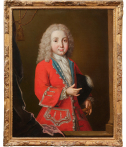
Portrait of a young gentleman
Early 18th century French school, Paris, 1717
Oil on canvas
Dimensions: H. 81 cm × W. 63 cm
18th century carved and giltwood frame .
Framed dimensions: H. 91 cm × W. 75 cm
Signed and dated on the back of the original canvas: Le Cocq, 1717 ("fait par le Cocq en 1717")
Provenance: ex collection of Rochechouart de Mortemart family (French noble), collection mark is stamped on the reverse of the stretcher with written infomation; "Collection Comte et Comtesse Charles Louis de Rouchechouart de Mortemart, estampes, dessins, peintures - inventaires 2000, n° 63 - "Collection of Count & Countess Charles Louis de Rochechouart de Mortemart: engravings, drawings, paintings - inventory 2000 n° 63")
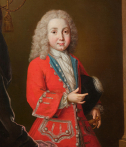
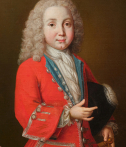
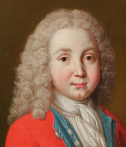
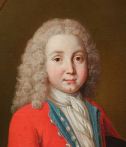
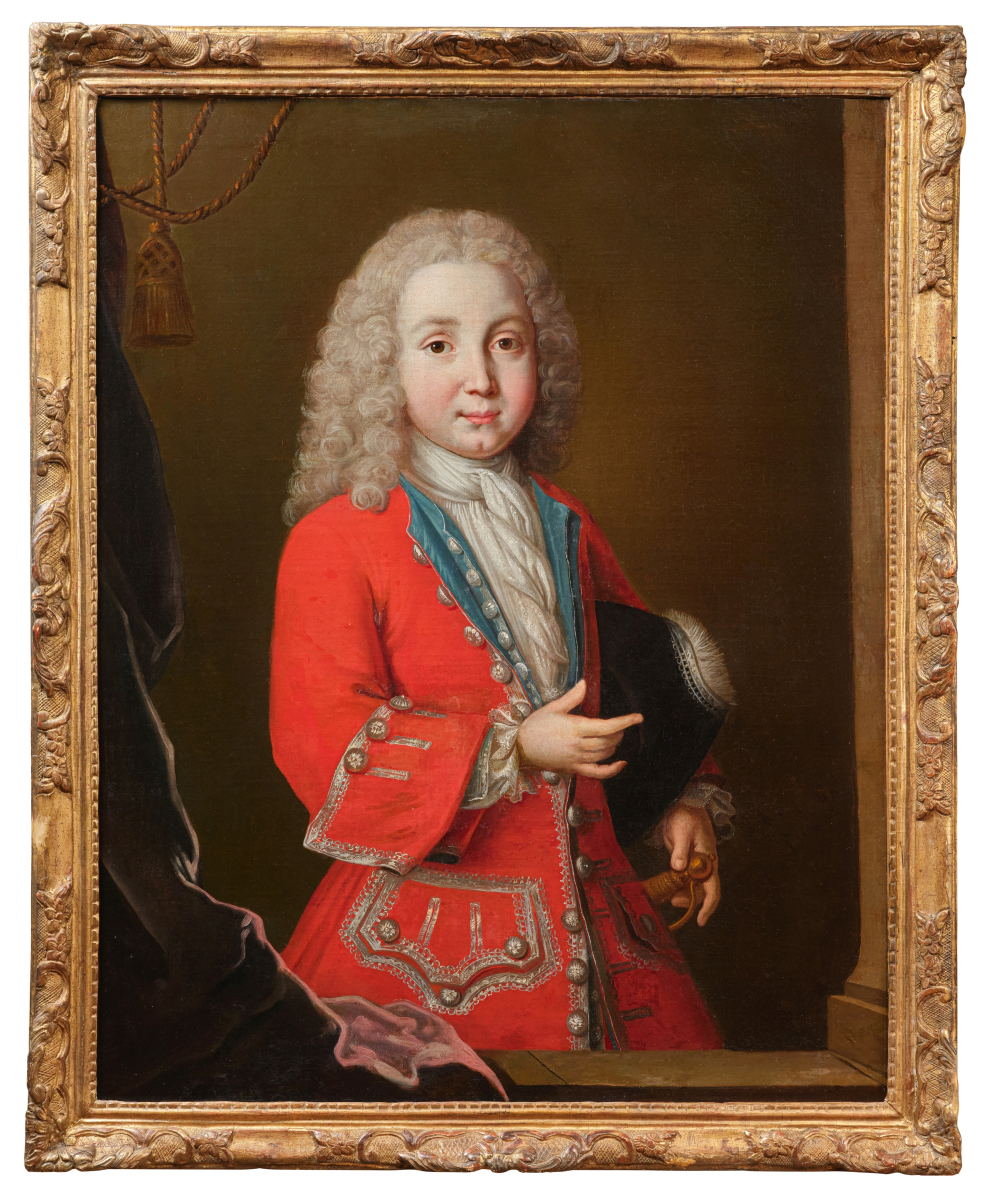
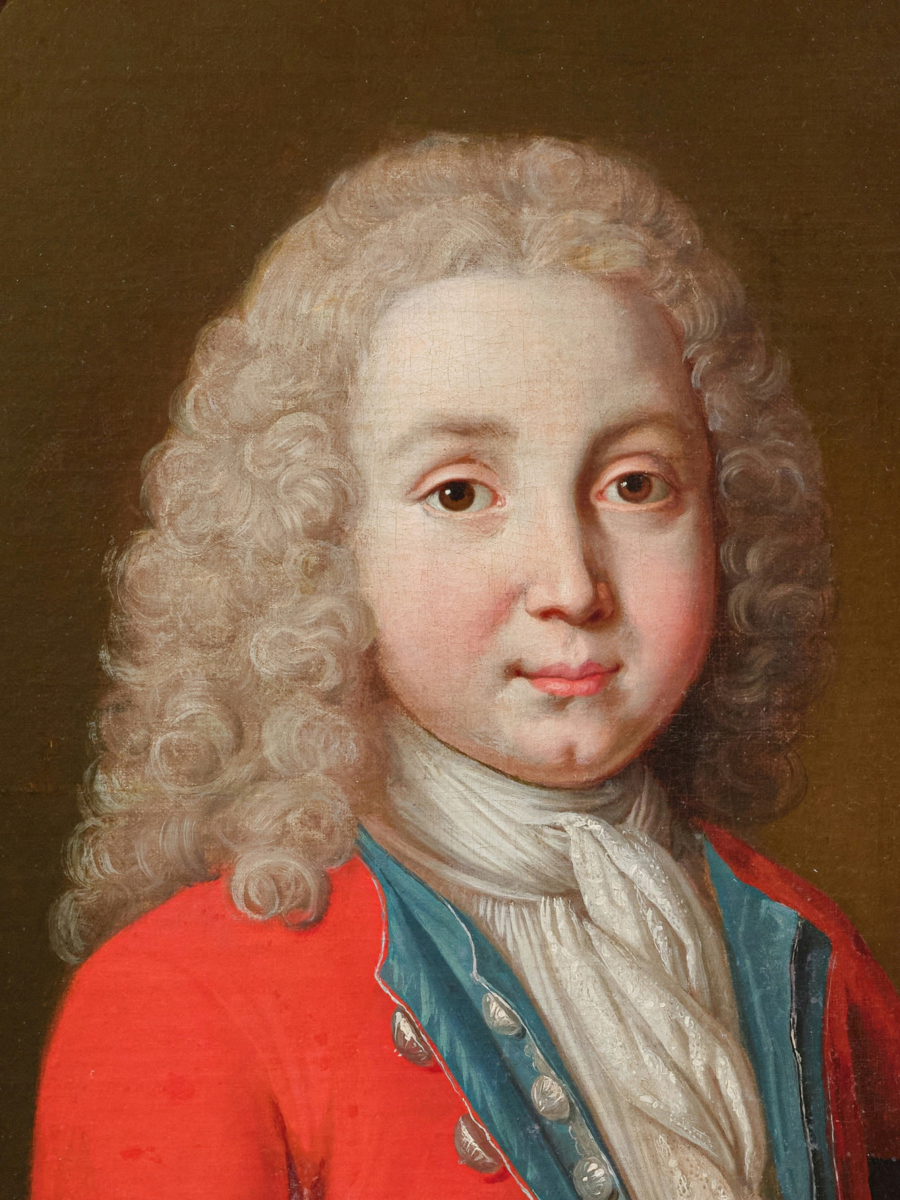
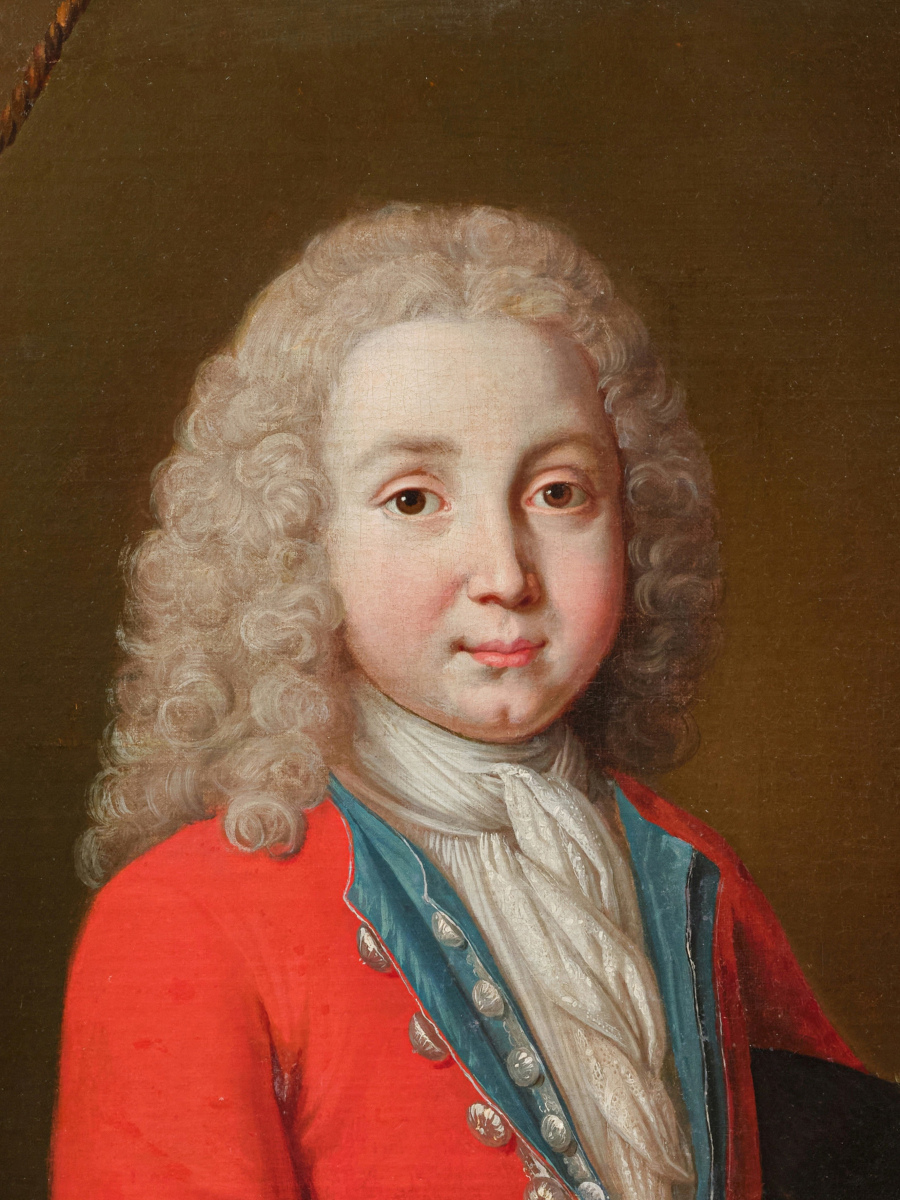
The portrait we are offering is a striking vision of theatricality and aristocratic splendour, presenting a young gentleman in the full magnificence of the French court at the beginning of the 18th century.
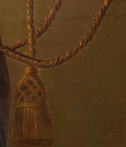
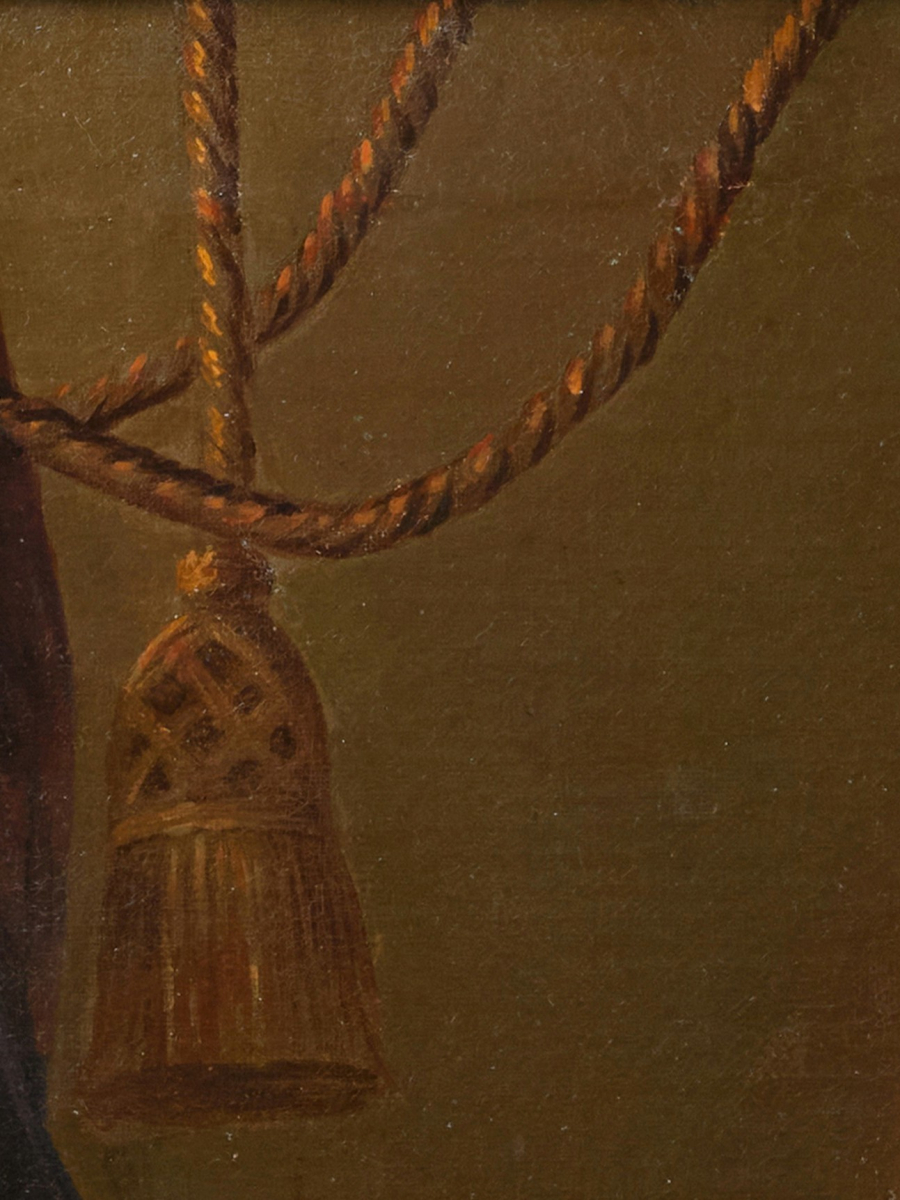
Behind a sumptuous claret velvet curtain, suspended from richly ornamented golden cords, the young sitter appears as though the curtain has just been drawn aside to reveal him upon a grand architectural stage. A refined stone entablature and monumental stone pier evoke the elegant architectural interiors of an aristocratic residence, lending the composition an unmistakably princely character.
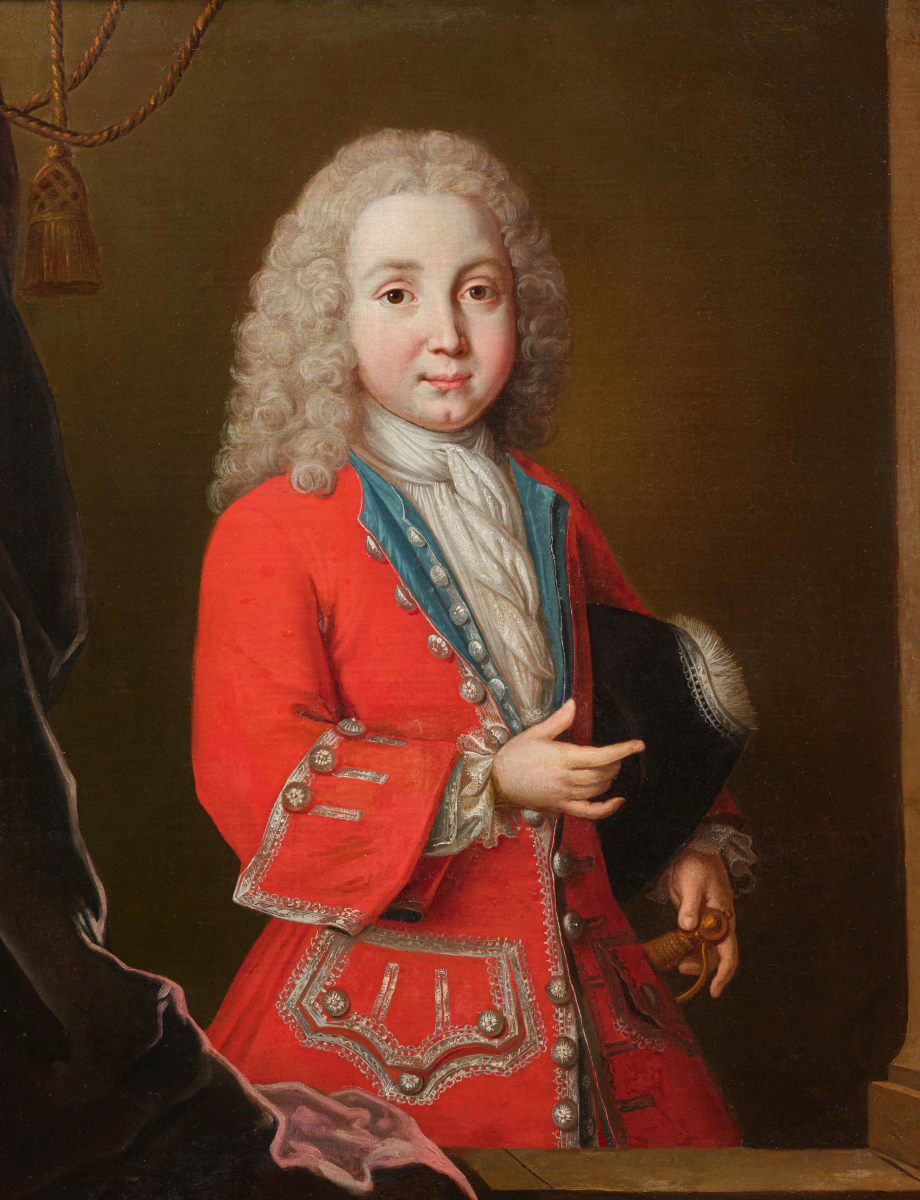
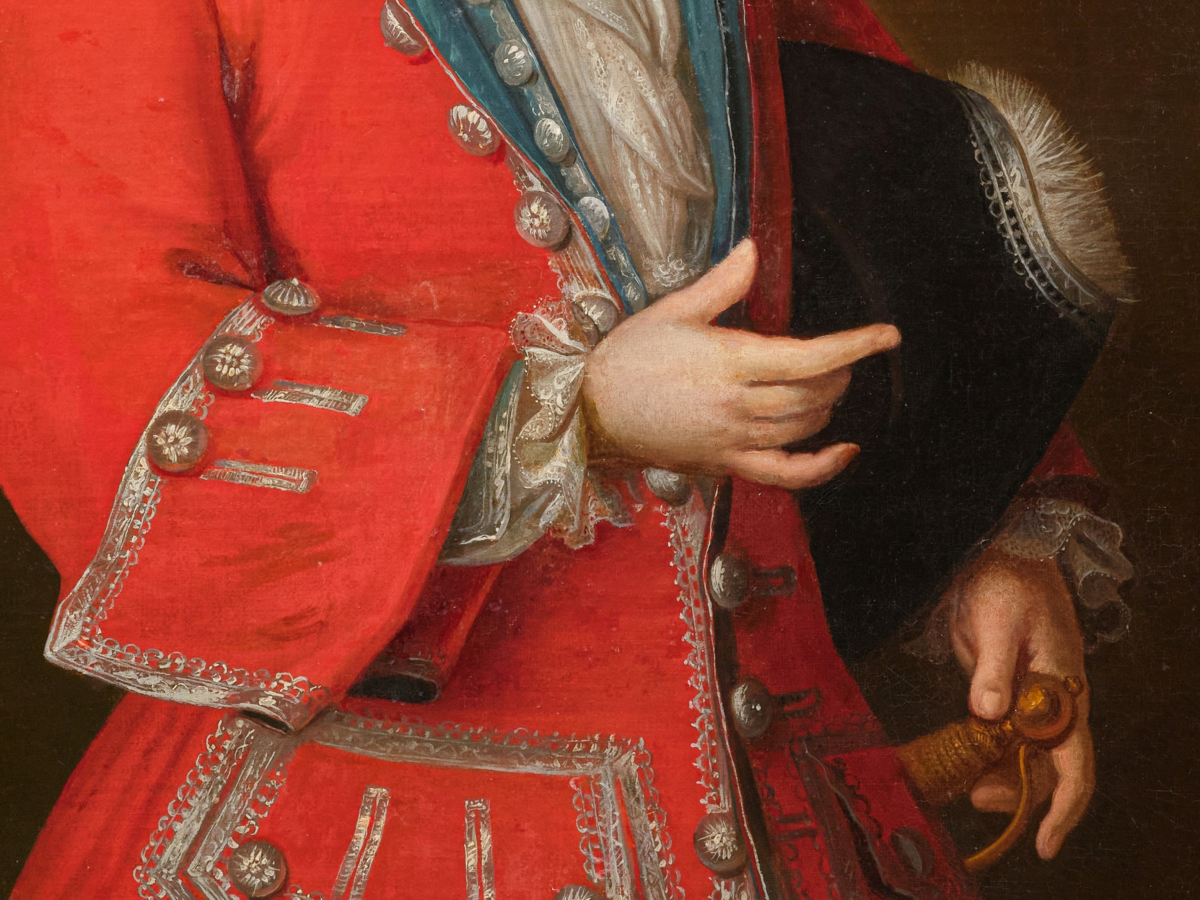
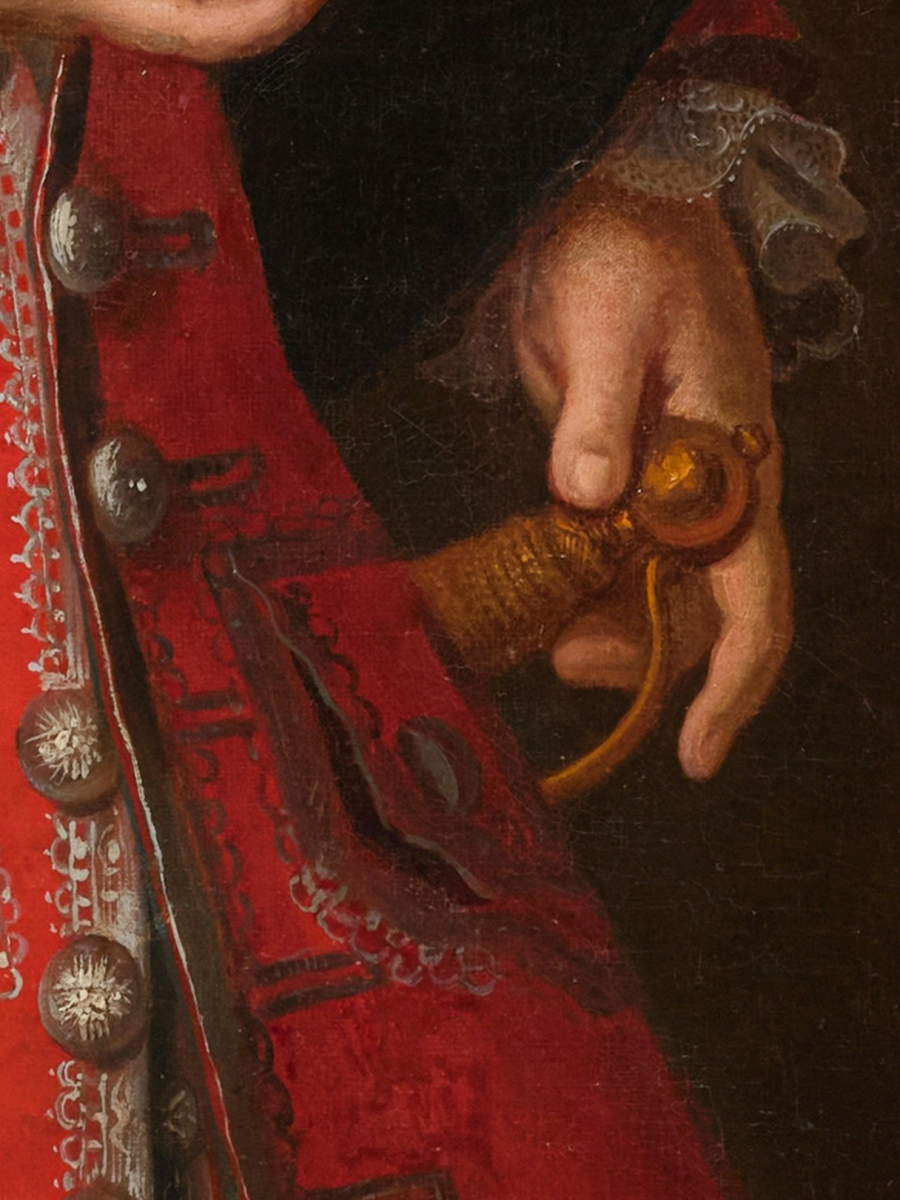
Despite his youth, he already wears a sword at his side, a powerful emblem of noble birth and the martial ideals of the French aristocracy. His assured bearing, sumptuous attire and elegant accessories evoke a world in which military distinction represented one of the highest avenues to honour at the court of Versailles.
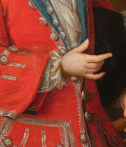
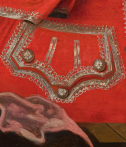
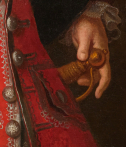
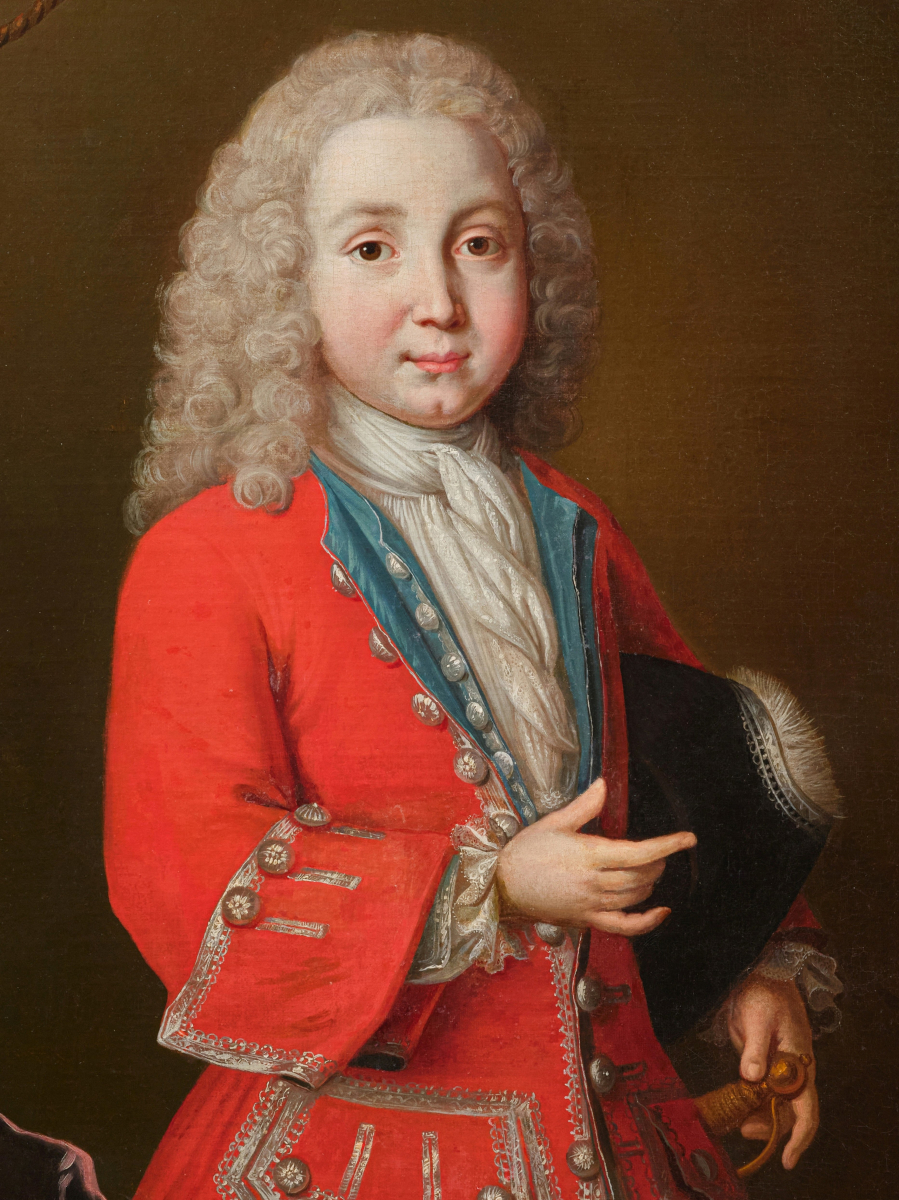
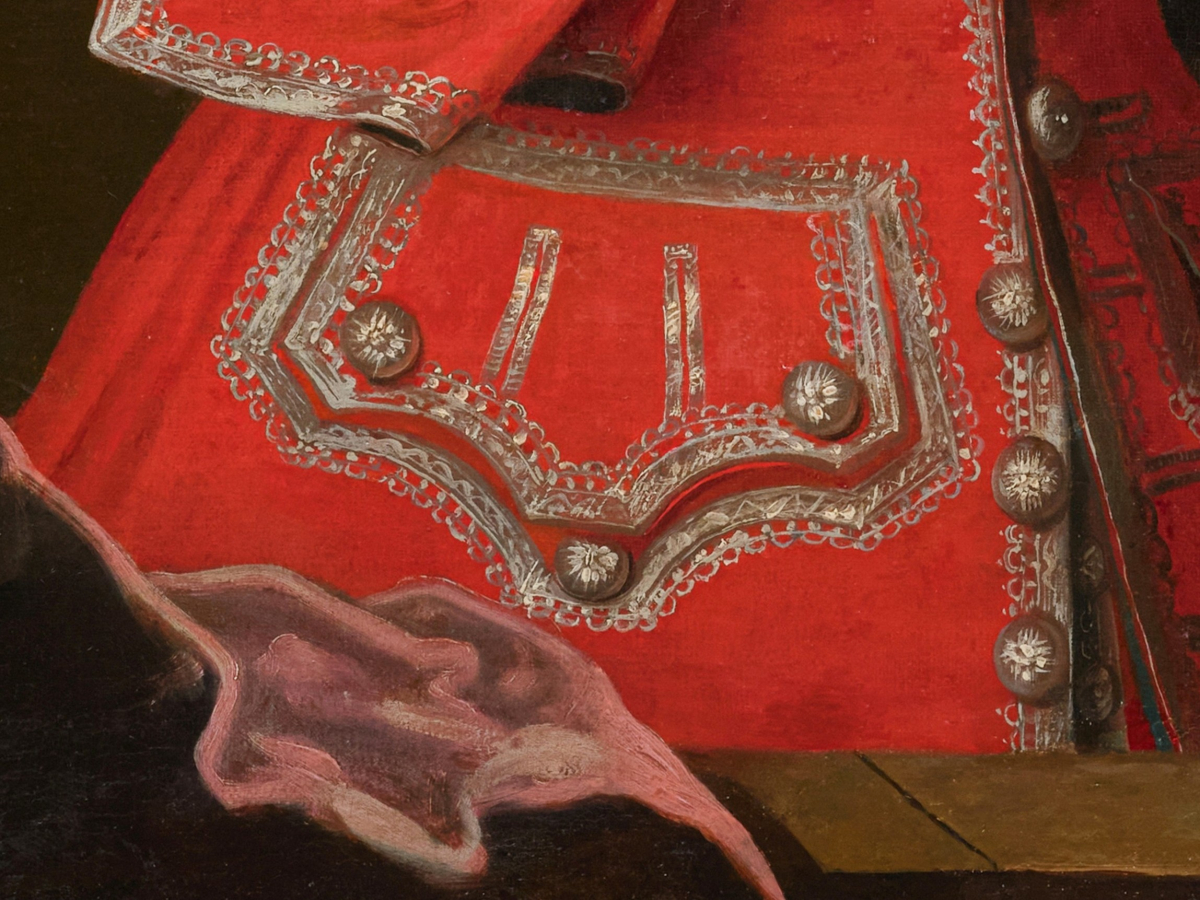
He is dressed in magnificent red velvet coat, richly embroidered with silver thread and adorned with numerous buttons. His long, powdered hair, arranged in the fashionable manner of the period, frames a delicately modelled youthful face, while his elegant hat, held with studied nonchalance, completes an ensemble of extraordinary refinement.
Although the precise identity of the sitter remains unknown, the portrait itself speaks eloquently of the world to which he belonged. Its distinguished provenance from the prestigious Rochechouart de Mortemart family, one of the great aristocratic families of France, further enhances its historical resonance; the family collection stamp is preserved on the reverse of the stretcher.
We are therefore in the presence of a truly attractive portrait, where theatricality, aristocratic splendour and the refinement of the French court converge in a composition of remarkable presence—a sumptuous celebration of youth, lineage, elegance and the ideals of Versailles at the dawn of the 18th century.
The painting is signed and dated “made by Le Cocq in 1717” on the reverse of its original canvas. While the artist’s precise identity remains unknown, he may be the Parisian painter Le Cocq whose works are recorded through 18th-century prints, notably the portrait of Cardinal Bartolomeo Massei, engraved by Gaspard Massi. The surviving print evidence confirms the existence of this otherwise little-known artist and adds particular interest to this remarkable signed portrait.