

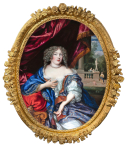
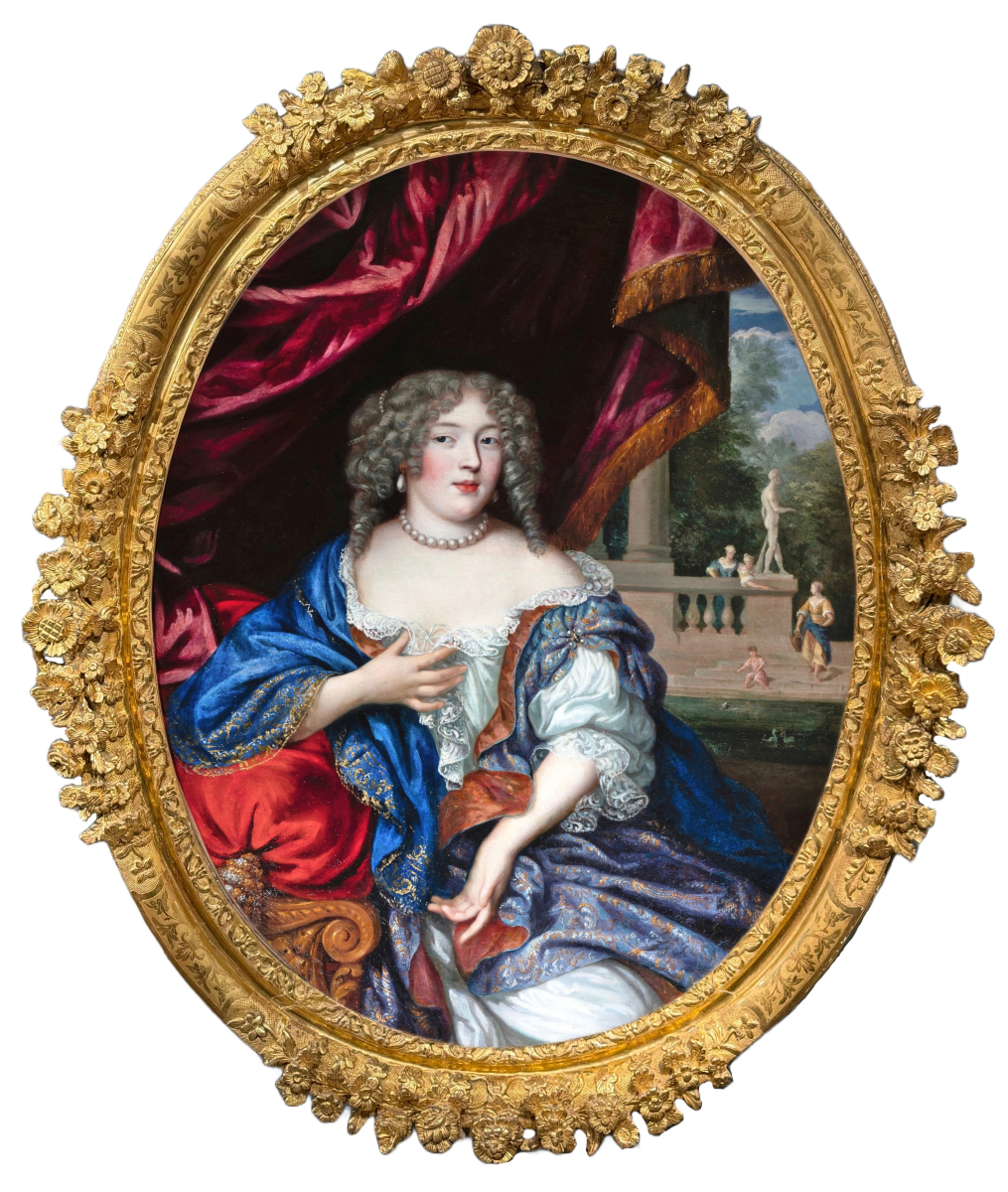
Portrait of Françoise-Athénaïs de Rochechouart de Mortemart (1640-1707), Marquise de Montespan,
by Henri Gascar (Paris, 1635 – Rome, 1701)
Paris, circa 1675
Oil on oval canvas.
Dimensions: h. 120 cm, w. 93 cm.
Important 17th century giltwood frame carved with flowers and foliage
Framed dimensions: h. 145 cm, w. 122 cm
This artwork is sold with a certificate of authenticity guaranteeing its origin, date of execution, and attribution to the artist.
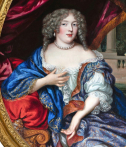
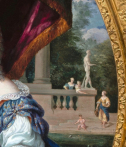
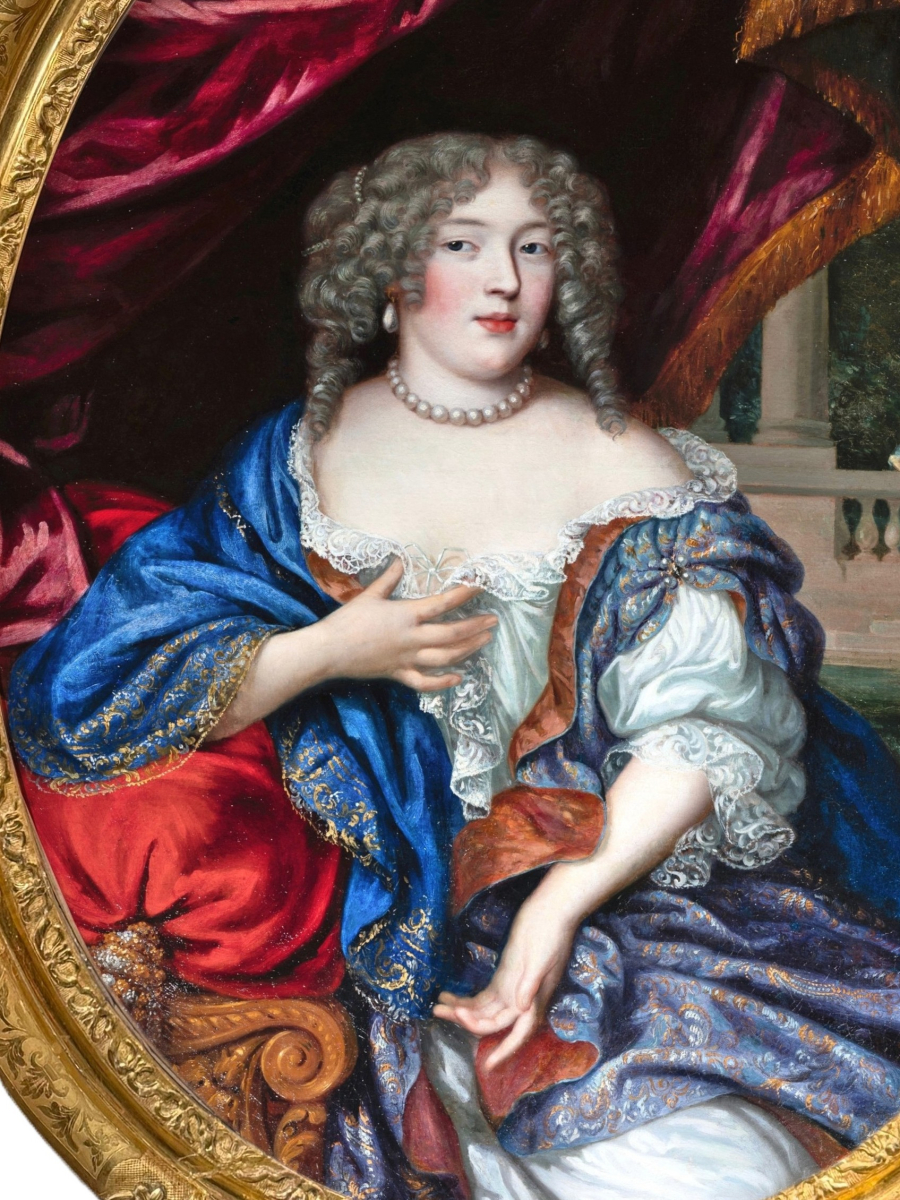
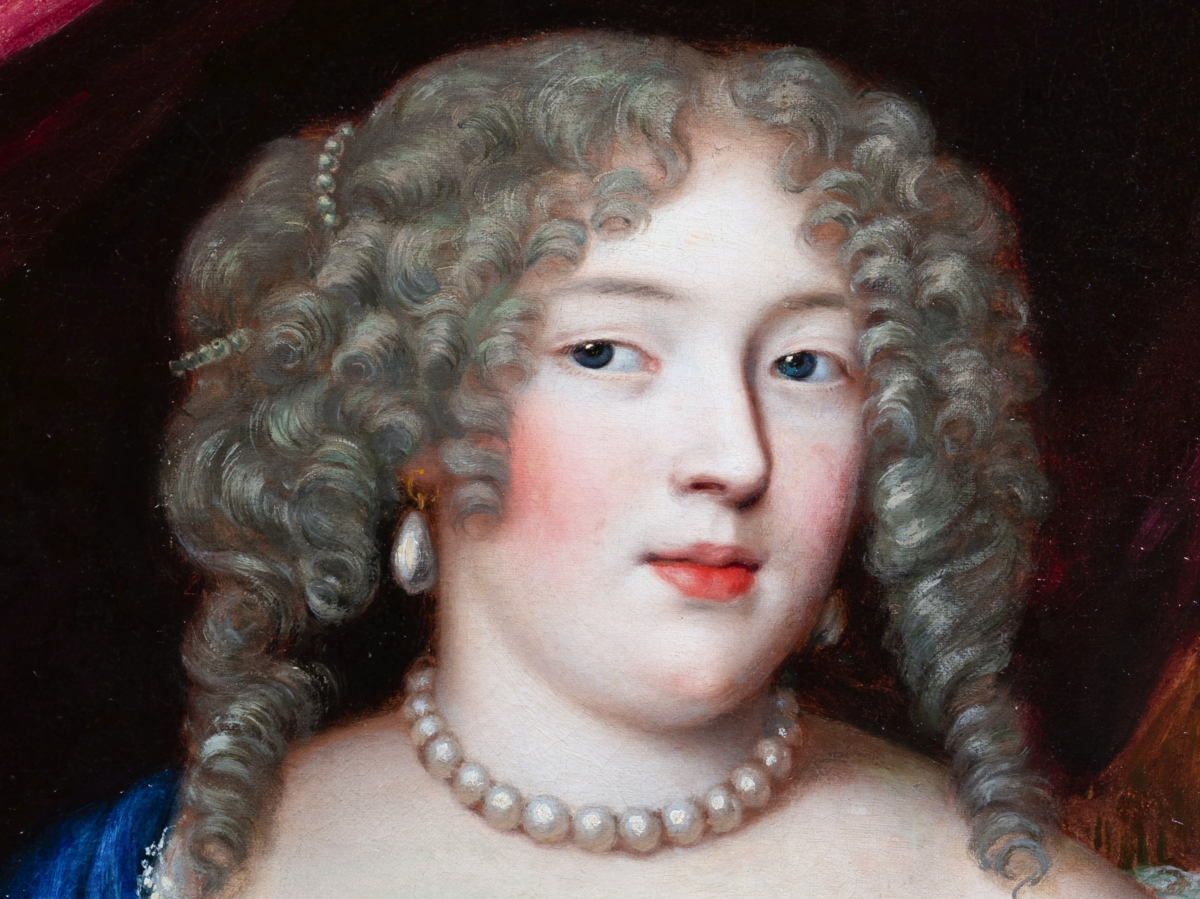
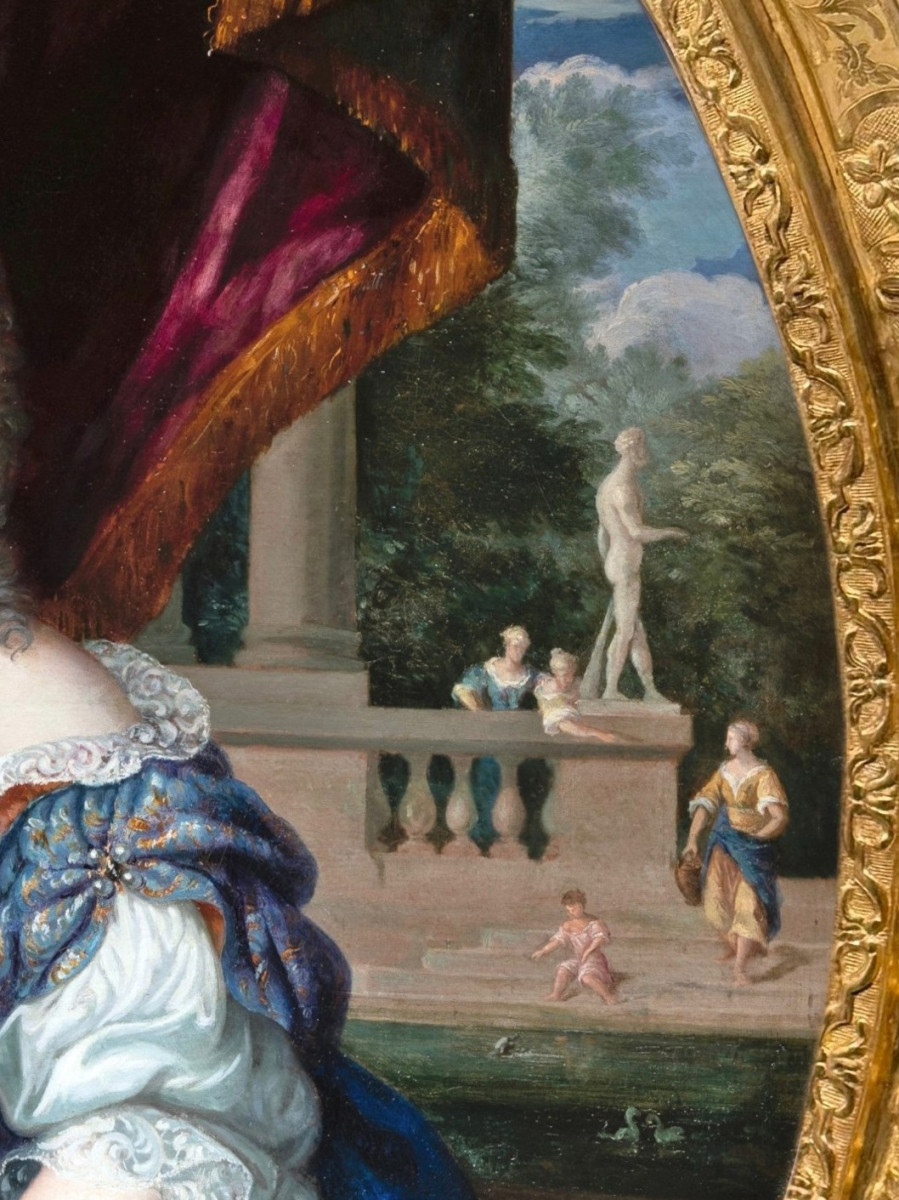
The monumental format of this rare oval painting immediately immerses us in the splendor of portraits from the height of Louis XIV's reign. Henri Gascar chose to place the royal mistress in a richly furnished palatial interior, before a heavy crimson velvet curtain that opens onto a classical landscape. The marquise, seated on her daybed, is portrayed from the waist up, gazing directly at the viewer with ease and confidence.
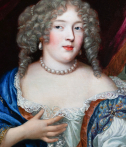
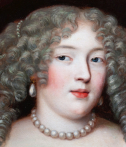
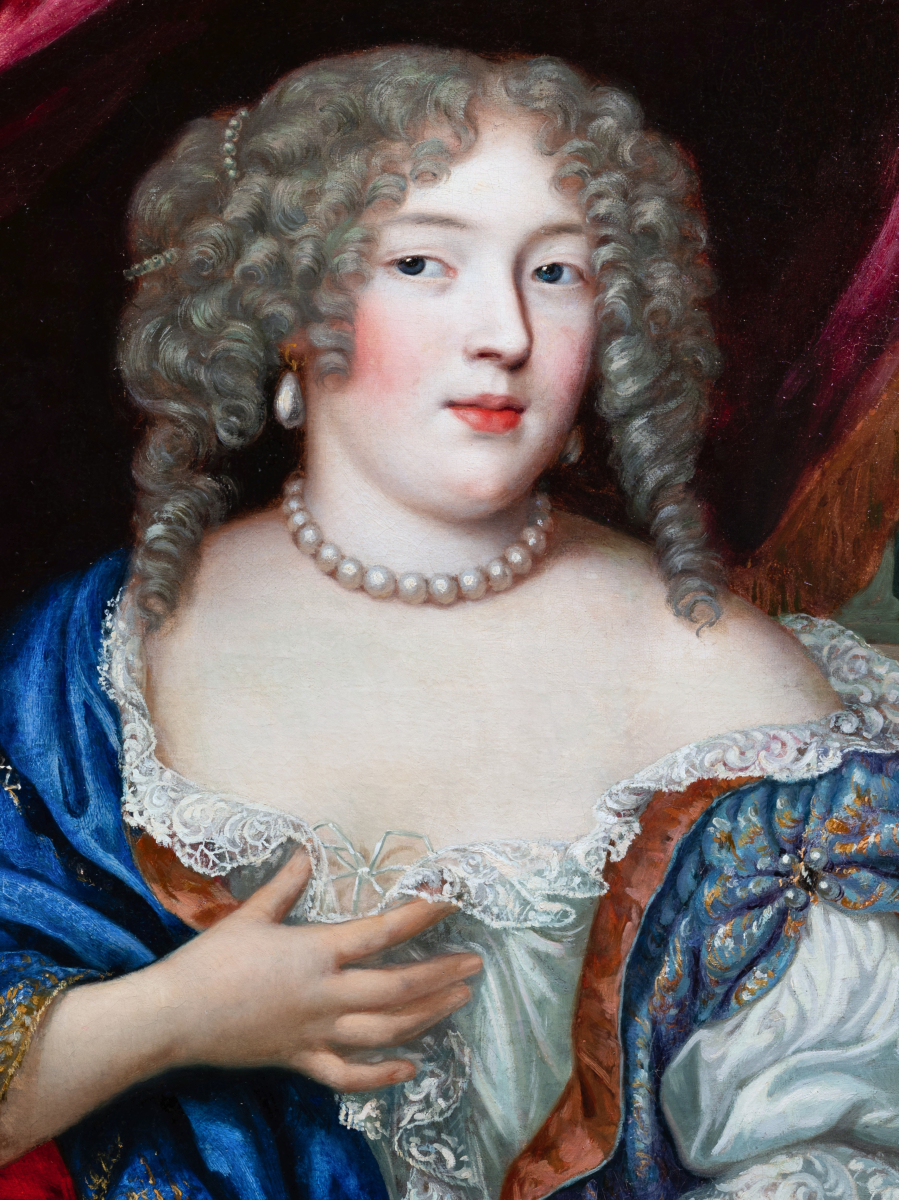
Her face, with its delicately rosy cheeks, is enlivened by her large blue eyes with slightly lowered eyelids, giving her a languid air. The marquise wears a hairstyle known as "à l'hurluberlu," very fashionable in the 1670s and 1680s. The curls, artfully arranged yet seemingly spontaneous, soften her features and create a luminous halo around her face. A pearl necklace underscores her rank and femininity.
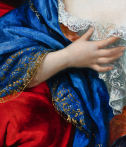
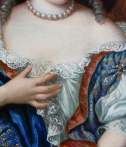
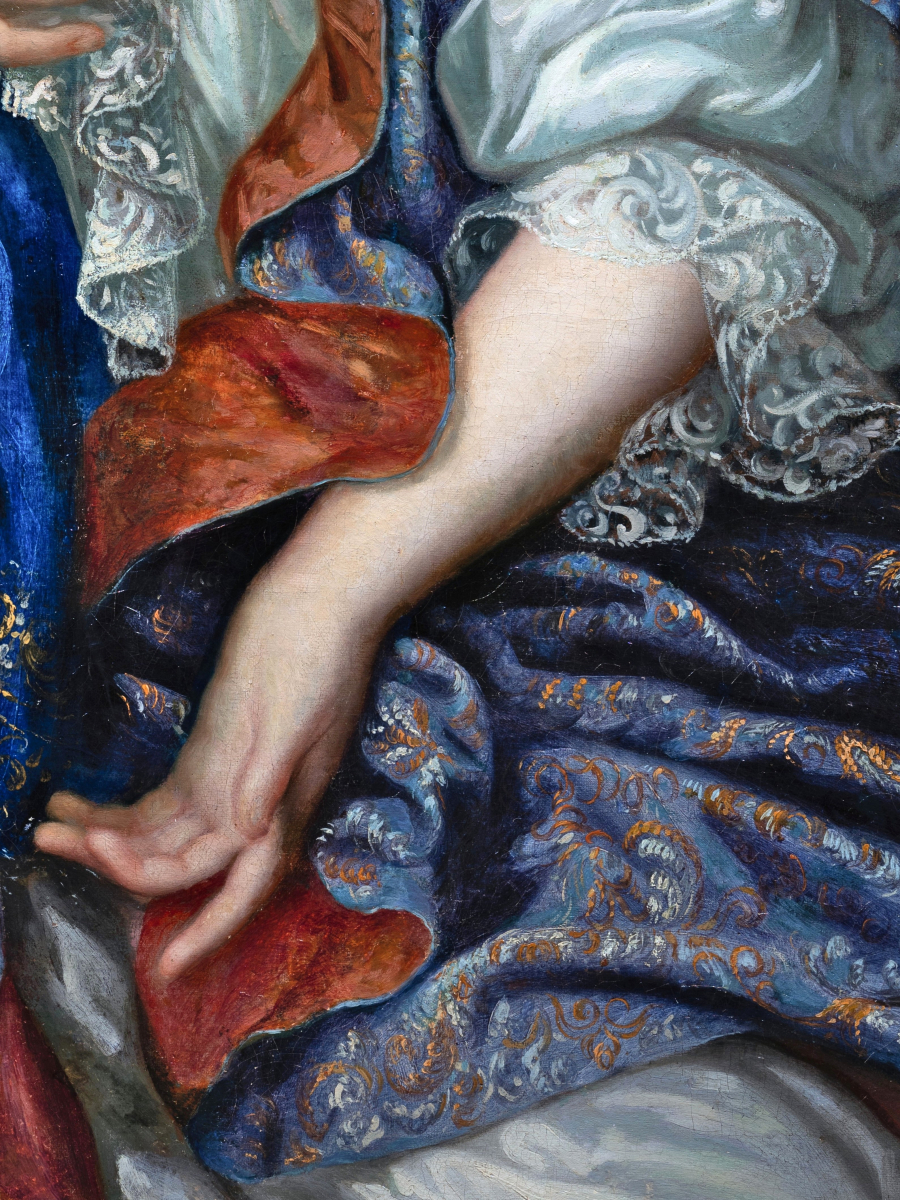
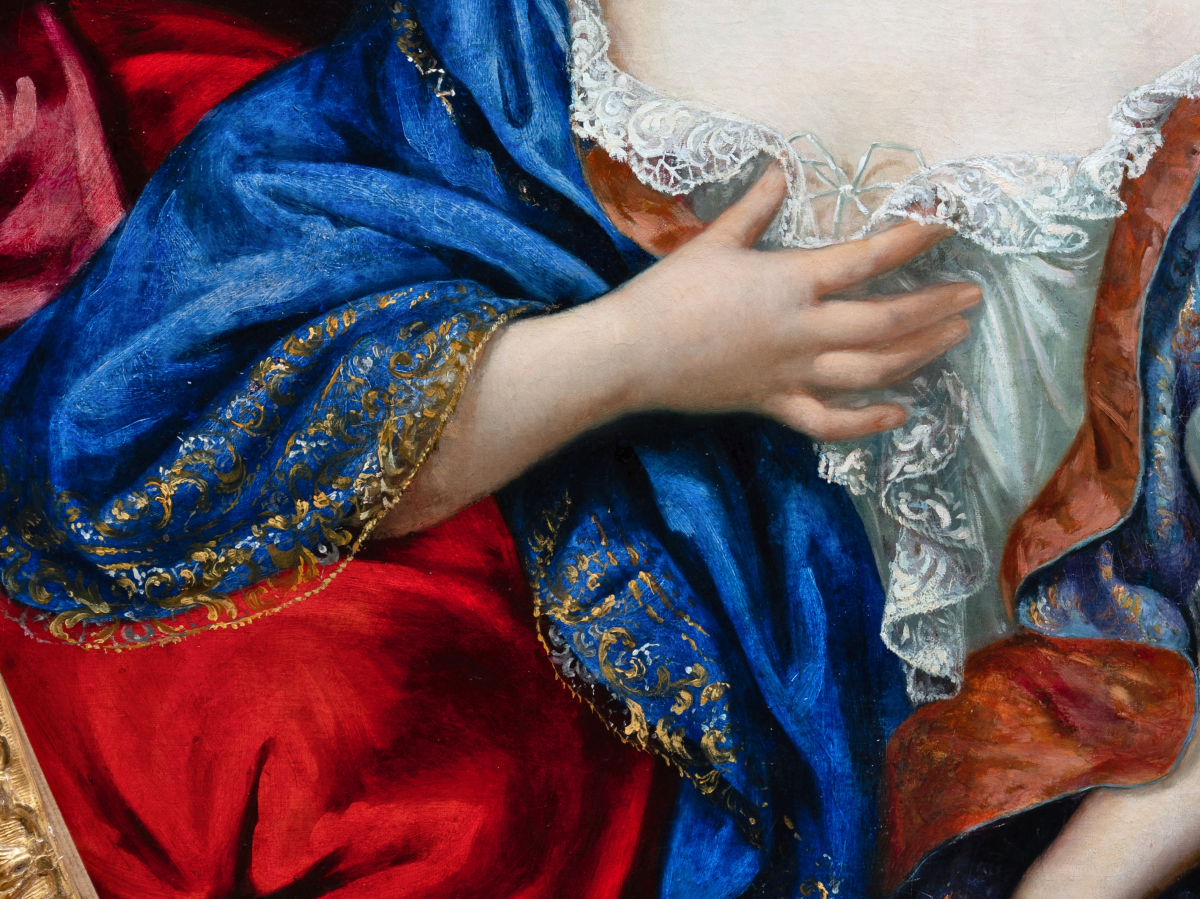
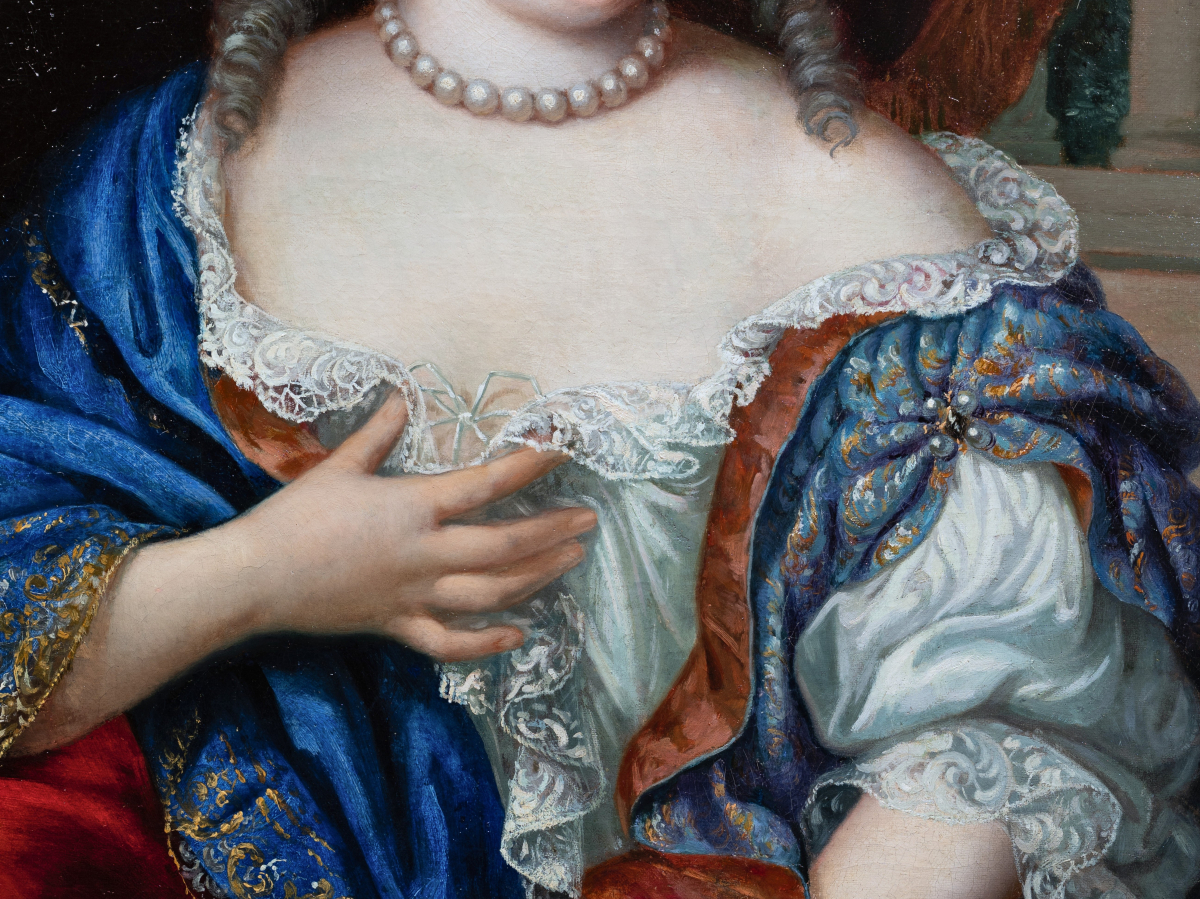
She is dressed in a white blouse adorned with rich lace, tied at the chest, and a violet silk dressing gown embroidered with gold and silver scrolls and lined with orange satin, casually fastened at her shoulder with a pearl clasp. Her right shoulder is draped with a wide lapis blue stole embroidered with gold.
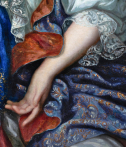
Her right arm rests gracefully on a red velvet cushion; the contrast between the blue of the stole and the red of the cushion, enhanced by the pearly sheen of her complexion, testifies to the artist's typically Baroque taste for a rich palette and textural effects.
The gestures of her hands are a central element in the symbolic construction of the image. Far from being mere expressive details, they articulate a veritable visual rhetoric, based on a subtle balance between introspection and radiance.
The right hand, resting delicately on her breast, conveys a gesture of protective restraint. Positioned at the juncture of the décolletage and the lace, it seems to temper the sensual allure of the undress with a touch of modesty. This gesture recalls the iconographic tradition of the modest Venus, where the hand that covers is also the one that draws the eye.
In contrast, the left arm extends towards the foreground. The open palm, the slightly extended index finger, introduces a gesture of address to the viewer. This open gesture, common in 17th-century formal portraits, signifies ease, availability, and mastery. It breaks the frontality of the composition, creates spatial depth, and guides the gaze towards the central figure.
In the background, a terrace adorned with a balustrade, a classical statue, and a few secondary figures evoke an idealized setting, alluding to humanist culture and the symbolic staging characteristic of court portraiture during the reign of Louis XIV.
Our portrait illustrates the construction of Madame de Montespan's public image at the height of her favor. More than a simple effigy, the work contributed to the visual propaganda of the court: it affirmed the social power, prestige, and cultural sophistication of one of the most influential women of the reign.
Henri Gascar (Paris, 1635 – Rome, 1701), a sought-after portraitist of the European aristocracy, was a favorite painter of Madame de Montespan. After beginning his career in Paris, he stayed at the court of London in 1674 under the patronage of the Duchess of Portsmouth, who secured him numerous commissions. Upon his return to Paris, Gascar was elected a member of the Royal Academy on October 26, 1680. His style, influenced by the tradition of grand French portraiture inaugurated by Charles Le Brun, combines solemnity, decorative refinement, and theatrical staging.
Related works:
• Henri Gascar, portrait of Louise de Kerouaille, 111x93 cm, Sotheby's auction, London 5/6/2008 lot no. 10
• Portrait of the Marquise de Montespan, Palace of Versailles, inv. MV 6610 (114.5x88.9 cm), formerly attributed to the workshop of Pierre Mignard
• Henri Gascar, Madame de Montespan at her Château de Clagny (private collection, dimensions unknown)