

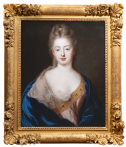
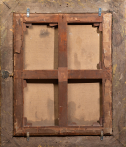


Portrait of the Marquise d'Espinay
by François de Troy (Toulouse, 1645 - Paris, 1730)
Late 17th century French School, circa 1685
Oil on canvas , 72 cm high, 56 cm wide
17th century carved giltwood Louis XIV period frame with floral corners
Framed: 92 cm high, 77 cm wide
We are grateful to Mr. Dominique Brême , the former director of the museum at the Domaine départemental de Sceaux and a specialist of François de Troy, for kindly confirming the attribution of this work to the artist.
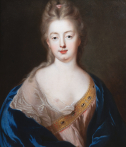
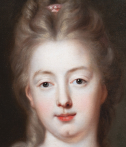
Our portrait depicts the Marquise d'Espinay who, under the refined brush of François de Troy, embodies with delicate grace the ideal of the female portrait under the reign of Louis XIV.
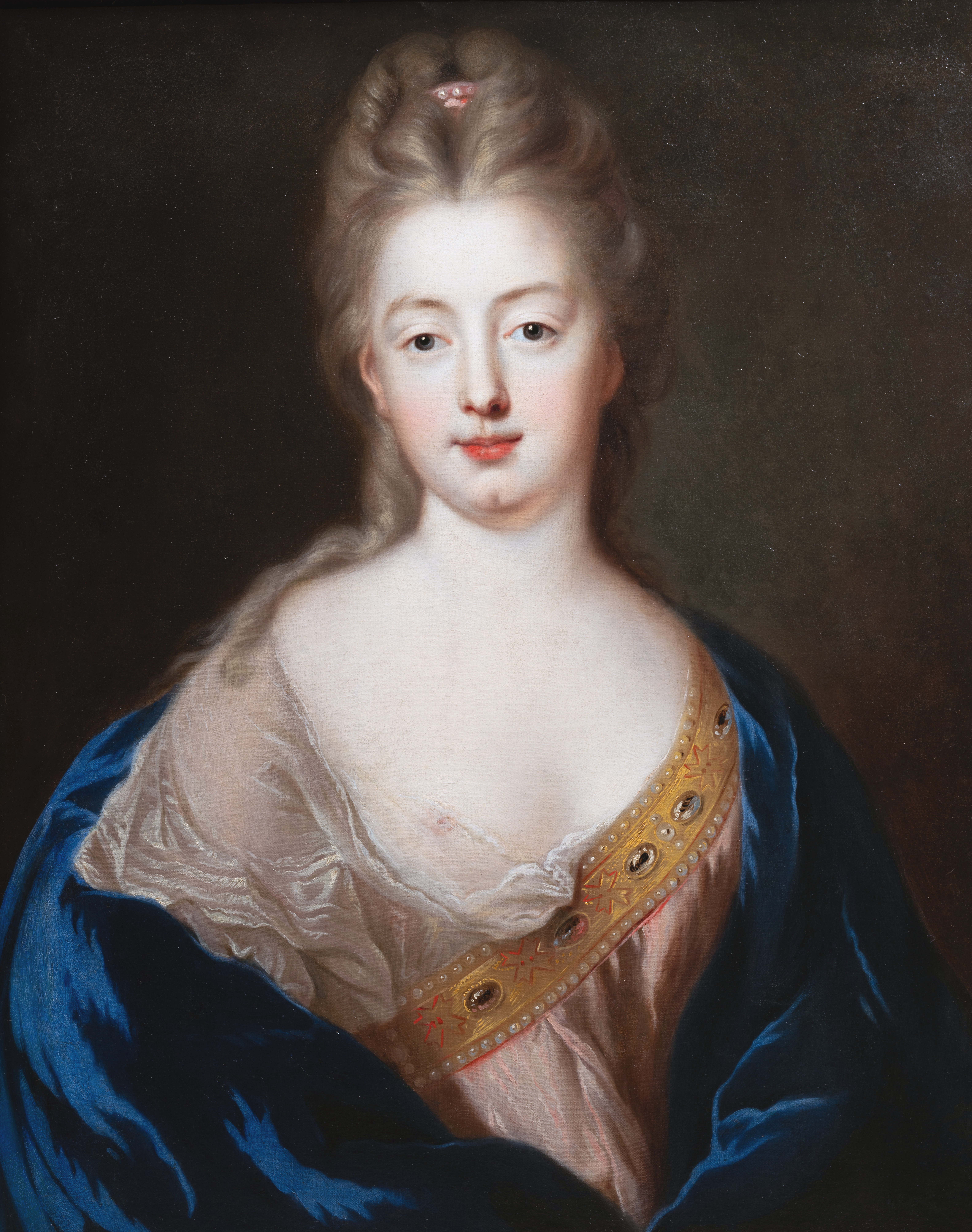
Presented in a half-length portrait against a dark, neutral background, she stands out with remarkable clarity, in a more intimate style than that of a grand formal portrait.
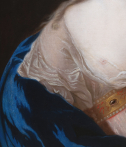
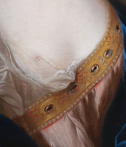
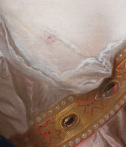
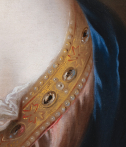
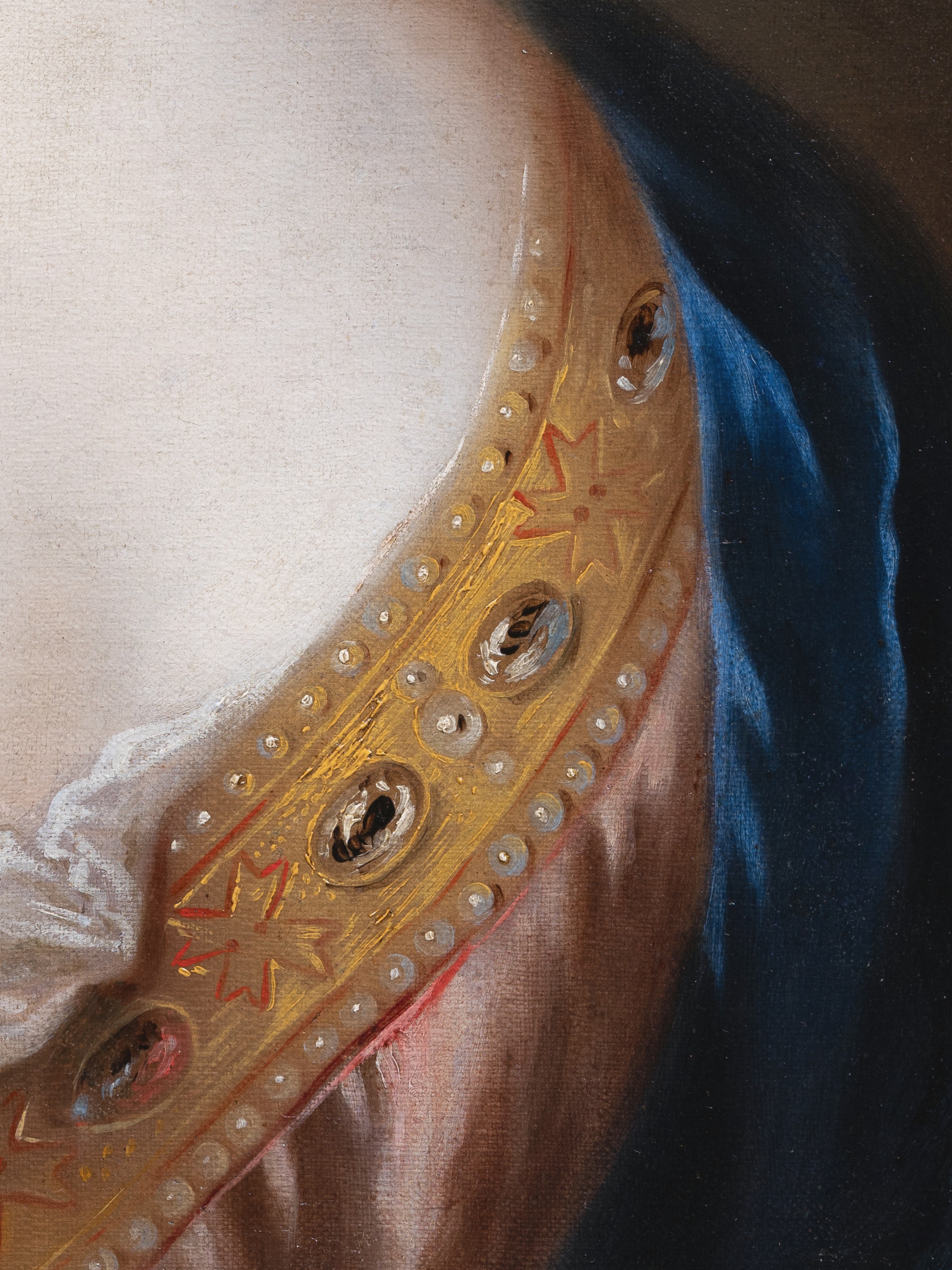
The marquise wears a pale pink satin dress with a low-cut bodice edged with a fine, translucent gauze chemise. A deep blue velvet coat drapes over her shoulders, creating a refined chromatic contrast between the rosy warmth of the silk and the cool depth of the blue. A gold band set with precious stones crosses the bodice diagonally, discreetly emphasizing the sitter's rank and wealth.

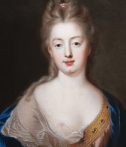
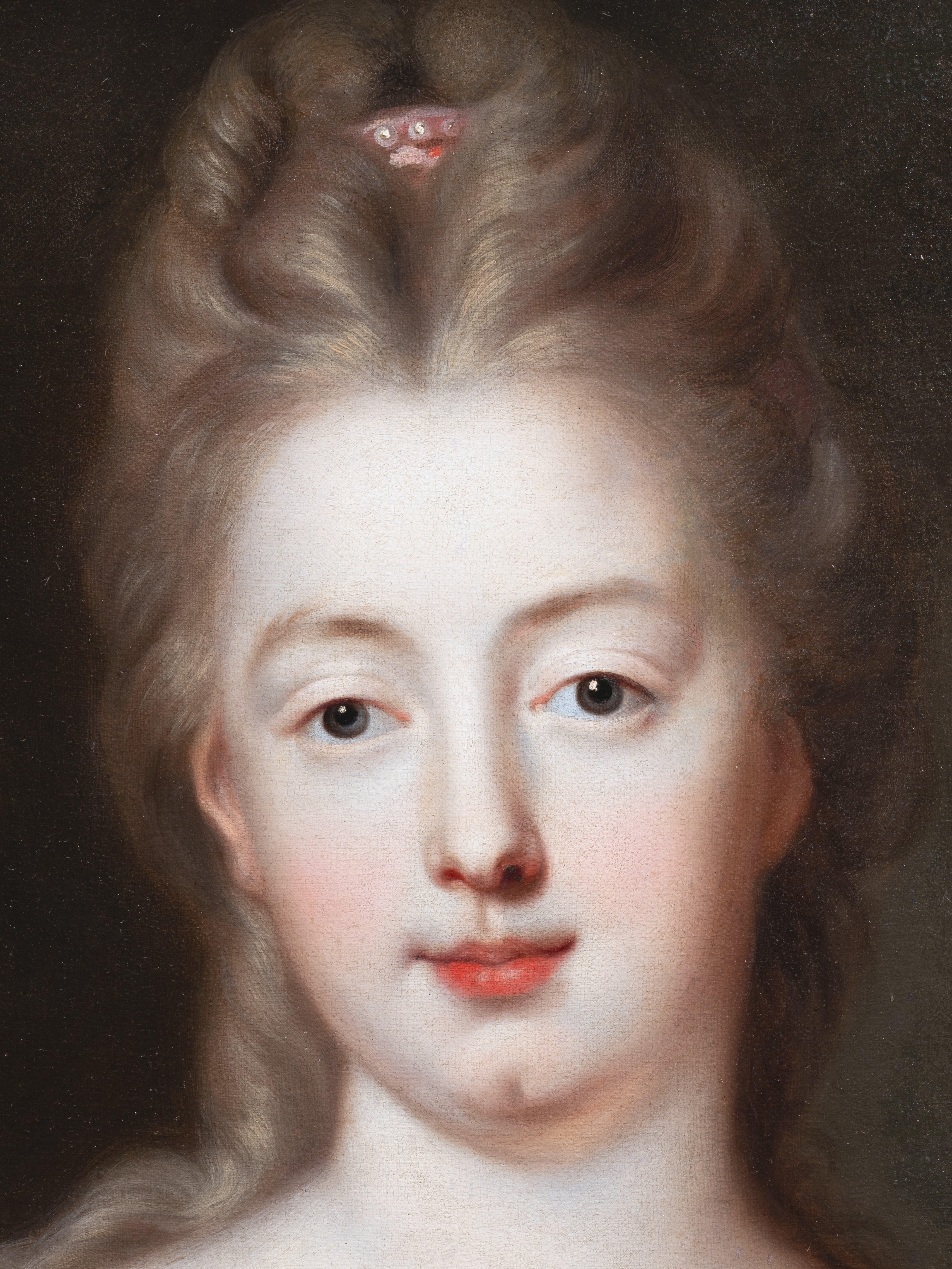
The soft, diffused light delicately illuminates the face: the translucent complexion, subtly rosy cheeks, and gently smiling lips create an image of measured grace. The gaze, direct yet unostentatious, establishes an immediate connection with the viewer. Here we find that distinctive quality in the treatment of flesh, a true signature of François de Troy . Through a subtle interplay of glazes and delicate transitions between light and shadow, the painter imbues the face and complexions with an almost pearly transparency, giving the skin a remarkably vibrant and lifelike presence. This way of allowing light to seep through the paint is integral to the elegance and refinement of his most accomplished portraits.
The updo foreshadows the evolution of women's fashion at the end of the 17th century. The hair is gathered into a voluminous updo at the crown, while a few strands delicately frame the face. This progressive elevation of the hair silhouette, which foreshadows the more structured hairstyles of later years, notably the fontange , fully contributes to the refined elegance of the whole.
The exquisite treatment of the fabrics also deserves special attention: François de Troy excels here in rendering materials, where the light transparency of the gauze, the delicate moiré of the silk, and the velvety depth of the cloak testify to his exceptional talent for capturing the sartorial refinements of his time. The extremely fine, almost ethereal gauze chemise subtly reveals the shape of a breast through the translucent fabric. This effect, far from being provocative, is part of a refined aesthetic characteristic of the late 17th century, where garments with classical influences and partially bare shoulders evoke the theme of cross-dressing as Venus, a motif particularly popular in aristocratic female portraiture at the time.
François de Troy thus mastered the art of suggestion rather than explicit depiction: the controlled transparency of the fabric highlights the pearly complexion and the softness of the modeling while respecting the codes of decorum. The discreetly covered yet perceptible breast contributes to a masterful evocation of the goddess, combining ideal beauty, feminine grace, and restrained sensuality. The painter thus blends technical virtuosity with symbolic subtlety: the richness of the fabrics affirms the prestige of the model's rank, while the fineness of the veil delicately reveals the vitality and sensual presence of the model, in a typically Louis XIV-era balance between pomp and sensual refinement.
Our portrait is entirely characteristic of the art of François de Troy , whose virtuosity became evident throughout his career and his success at court. The artist even uses the same clothing here as in a portrait held at the Herzog Anton Ulrich Museum in Brunswick, demonstrating his fondness for certain costumes which he incorporated into several female portraits.
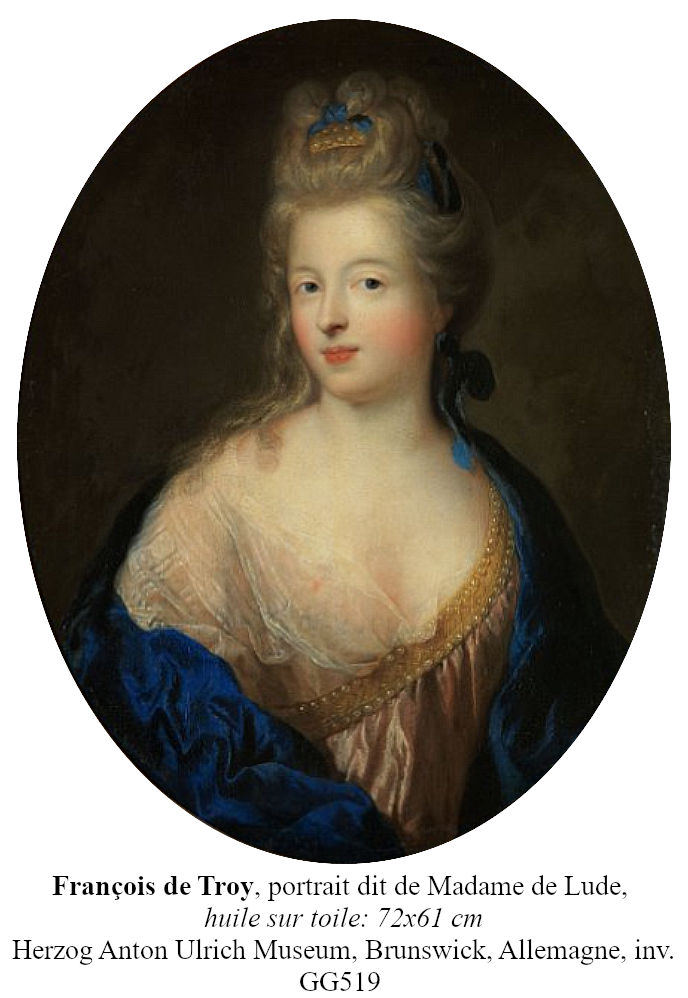
Executed in the same vein as the portraits painted by François de Troy in the 1680s and 1690s, our painting illustrates the evolution of aristocratic portraiture during the reign of Louis XIV: the intimacy of the framing, the restrained composition, and the soft lighting reflect a new taste for a more direct and sensitive representation, far removed from the theatrical monumentality of the grand state portraits of previous decades. The Marquise d'Espinay thus appears as the embodiment of elegant and poised femininity, where social prestige is now expressed through the grace, refinement, and immediate presence of the sitter.
Françoise Marie Michau de Montaran (Rennes, 1665 - Chateaugiron, 1715), Marquise d'Espinay
Françoise-Marie Le Prestre, née Michau de Montaran, married René Le Prestre (1655-1724), Lord of Lézonnet and 8th Marquis of Espinay, in 1683. He was a representative of the Third Estate, Advocate General to the Grand Council, Seneschal of the Presidial Court of Rennes, Treasurer of the Estates of Brittany (in 1687), and President of the Parliament of Brittany. It was probably on the occasion of their marriage in 1683 that François de Troy immortalized the young bride. The Le Prestre family maintained ties with the artist, as he painted portraits of their son, Louis Le Prestre, and his wife, Marie de Soul de Beaujour, between 1722 and 1723 (see D. Brême, François de Troy, Paris, 1997, pp. 176-177).
Francois de Troy (Toulouse 1645 – Paris 1730)
François de Troy, from a family of Toulouse artists, stood out very early on with the creation of coats of arms for the solemn entry of the Prince de Conti into Toulouse in 1662. We then find him in Paris where he continued his training. in the studio of Nicolas Loir, then of Jean I Cotelle, whose daughter he married in 1668. First a history painter, he was approved by the Academy in 1671 then received in 1674 with "Mercure et Argus". Through his frequentation of the studio of Claude Lefebvre, he turned to the art of portraiture, of which he was to be one of the greatest representatives of the end of the reign of Louis XIV and of the Regency. It is believed that thanks to his friendship with Charles Le Brun, the King's first painter, he was put in contact with Madame de Montespan, who made him one of her appointed artists. The interpersonal skills of the impetuous favorite will allow her to come into contact with the royal family and with everything that matters at court and in Paris. He will also be the portrait painter of the royal family of England, exiled in France to the castle of Saint-Germain-en-Laye from 1689. Fine courtier, François de Troy then became attached to the Duke of Maine, beloved bastard of Louis XIV and his influential wife, daughter of the Prince of Condé. Assistant professor in 1692, he was appointed professor at the Academy the following year. He will be its director from 1708 to 1711. He will also be called upon several times by the Parisian aldermen for religious commissions. His son Jean-François (1679 – 1752) collaborated with him at the end of his career before taking up the torch and perpetuating the family glory.