

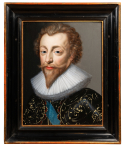
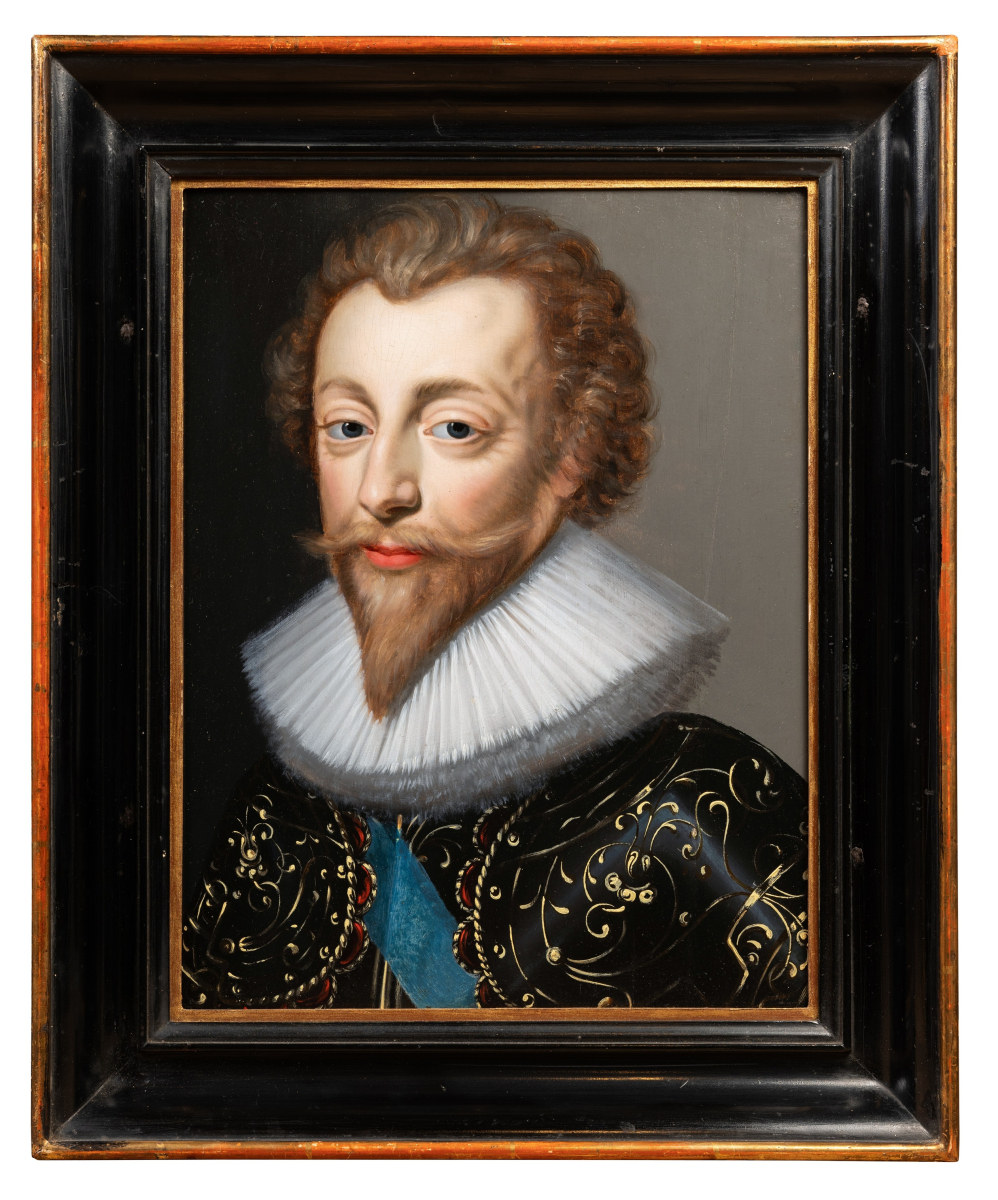
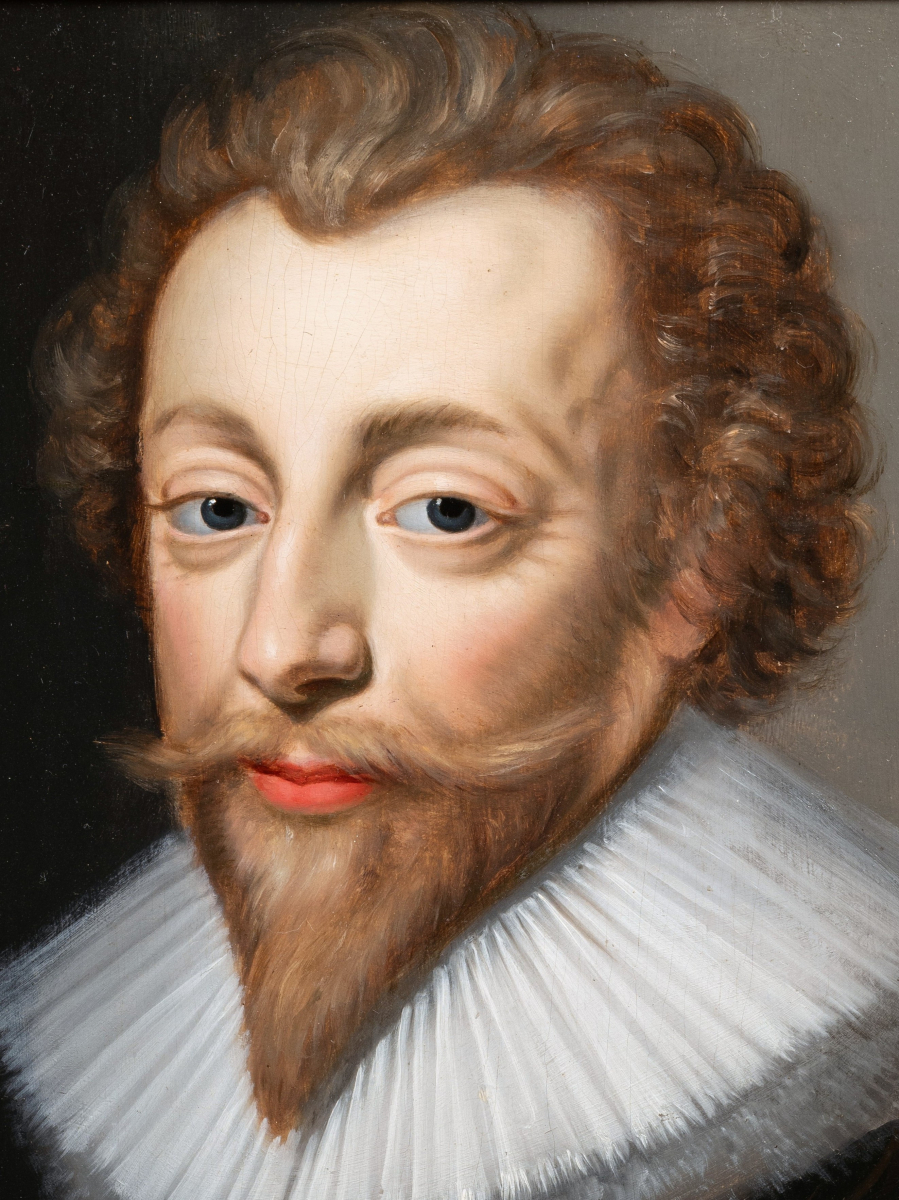
Portrait of the Marquis de Montespan, attributed to Claude Deruet (1588-1660)
17th century French School, circa 1620-1630
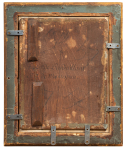
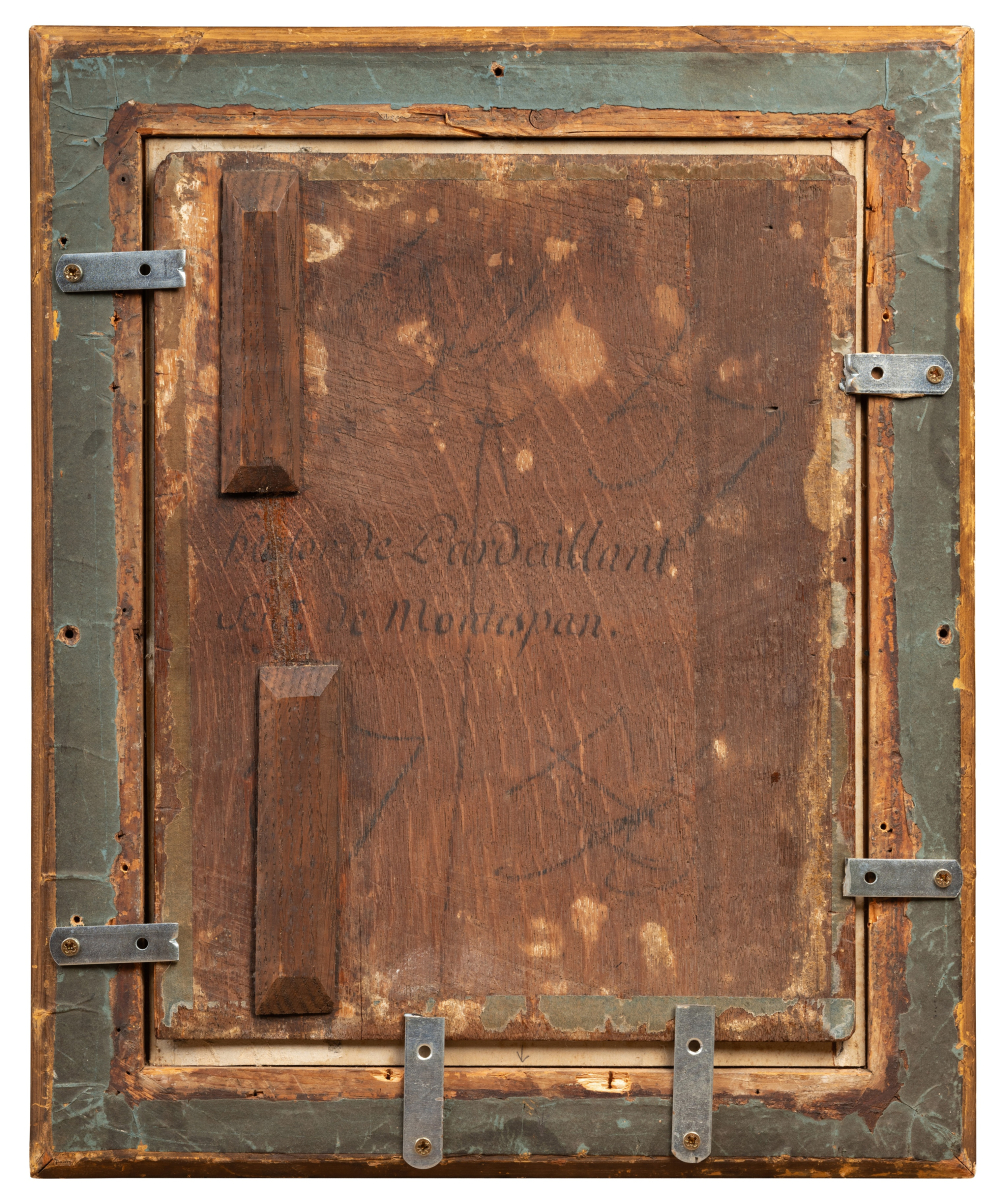
Oil on oak panel, h. 32 cm, w. 25.5 cm
Ebonized wood frame, framed: h. 43.5 cm, w. 36 cm
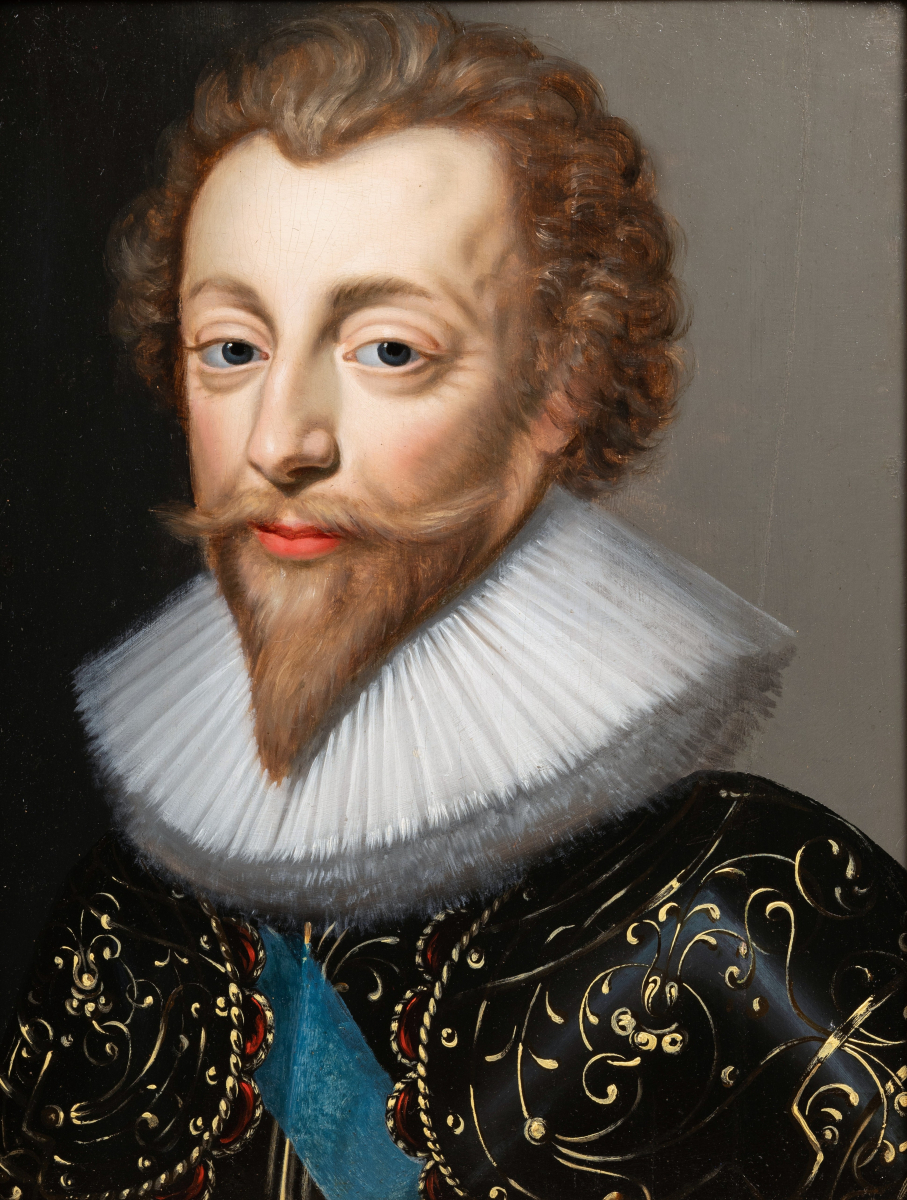
Portrait of Roger-Hector de Pardaillan de Gondrin, Marquis de Montespan (?-1661), father of Louis-Henri de Pardaillan de Gondrin, who would become the future husband of Françoise-Athénais de Rochechouart, Marquise de Montespan.
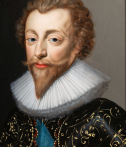
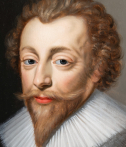
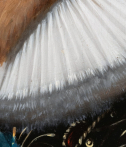
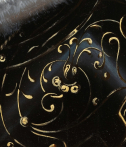
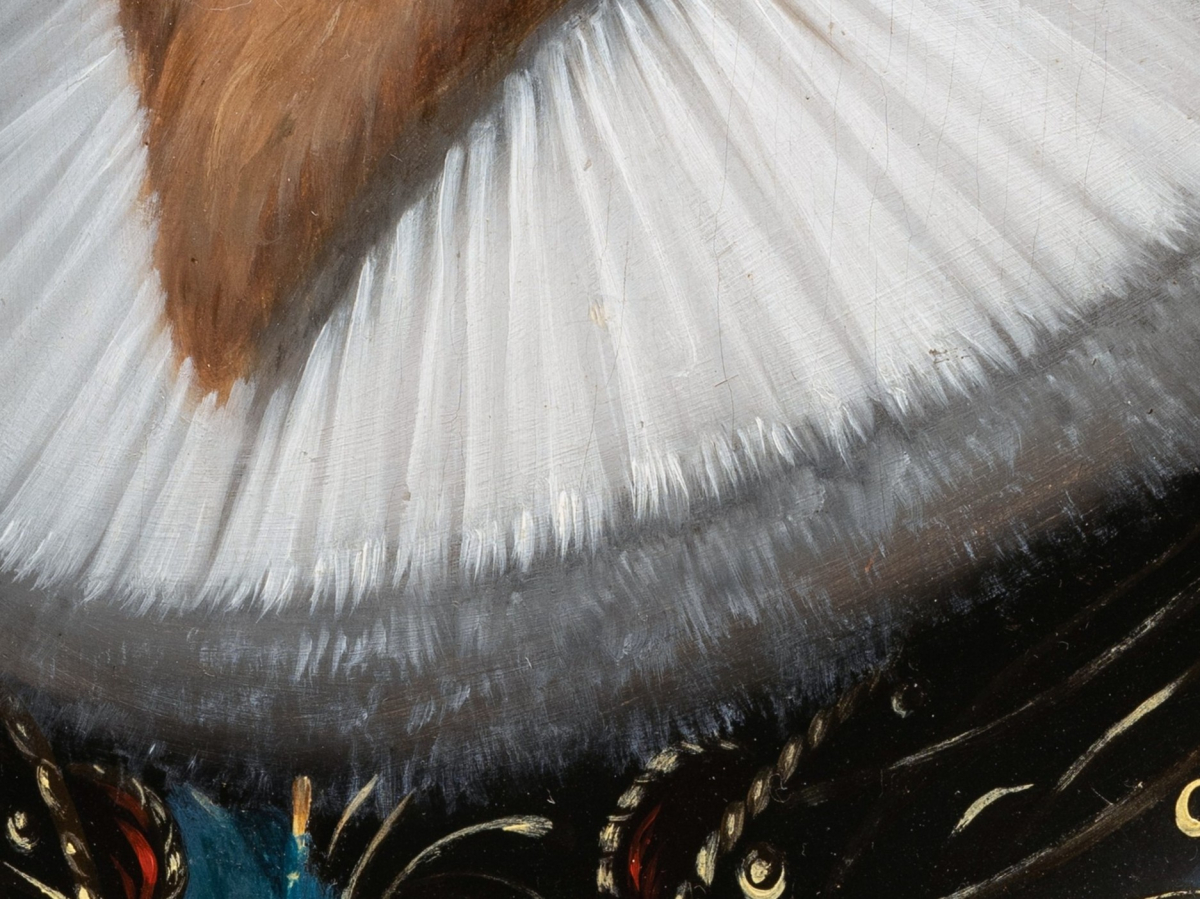
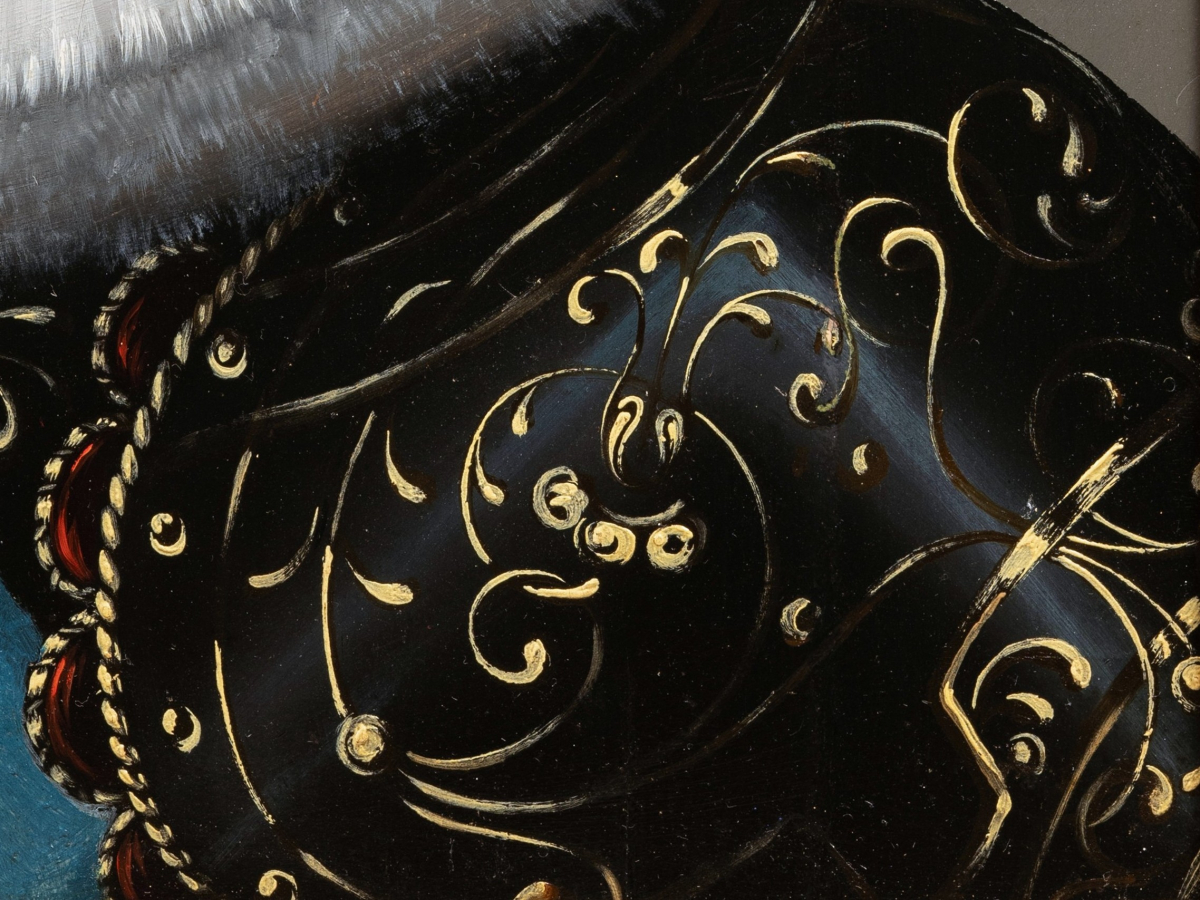
The sitter is portrayed in a bust-length portrait, turned three-quarters, his face bathed in light, gazing at the viewer with his large blue eyes. Styled in the fashion of the time, the young marquis sports an elegant mustache and a pointed beard. He wears a cuirass with gilded scrollwork ornaments, a wide white lace ruff, and the blue ribbon of the Order of the Holy Spirit across his shoulder.
Claude Déruet, born around 1588 in Nancy where he died on October 20, 1660, was a Lorraine painter of the late Mannerist style.
Déruet was an apprentice of Jacques Bellange, the official court painter to Duke Charles III of Lorraine. He was ennobled in 1621 and made a Knight of the Order of Saint Michael in 1645 by Louis XIII. Déruet owned a luxurious residence in Nancy, called La Romaine, where Louis XIII and the Queen stayed in 1633. Déruet primarily painted small and medium-sized canvases and created series of drawings, as his post-mortem inventory reveals.
His oeuvre includes a few religious paintings, often on copper, particularly depictions of the Virgin in a garland of flowers in the Flemish style, as well as scenes of everyday life and numerous portraits in the Nordic and French traditions of the 16th century. But Déruet's originality lies in a romantic mythology, where the equestrian figure reigns supreme, whether in allegorical portraits (Louis XIV on horseback with Minerva, Juno, and Diana, Versailles; The Horsewoman and the Goddesses, Musée Lorrain, Nancy), or in scenes teeming with small figures, set against an architectural backdrop reminiscent of Caron (The Rape of the Sabine Women, 1651, Alte Pinakothek, Munich) or in a meticulously detailed landscape, inspired by the Italianate Flemish painters of the 16th century (Banquet, Musée Lorrain, Nancy; series of Amazons, c. 1621, Musée des Beaux-Arts, Strasbourg; series of Elements, painted for the Château de Richelieu, c. 1640–1641, Musée des Beaux-Arts, Orléans).
Roger-Hector de Pardaillan de Gondrin, (?–1661) Marquis d'Antin, Marquis de Montespan, Count of Miélan, Knight of Honour to Madame the Duchess of Orléans, Seneschal and Governor of Bigorre. He had married by contract of 11/06/1635, Marie Christine Zamet, daughter of Jean Zamet, Baron of Murat, Marshal of the King's camps and armies, Governor of Fontainebleau. From this union were born several sons including Louis-Henri de Pardaillan de Gondrin, who would inherit the title of Marquis de Montespan (1640-1701) married in 1663 to Françoise-Athénais de Rochechouart.