

Workshop of Pierre Gobert (1662–1744)
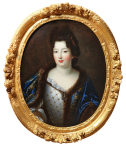
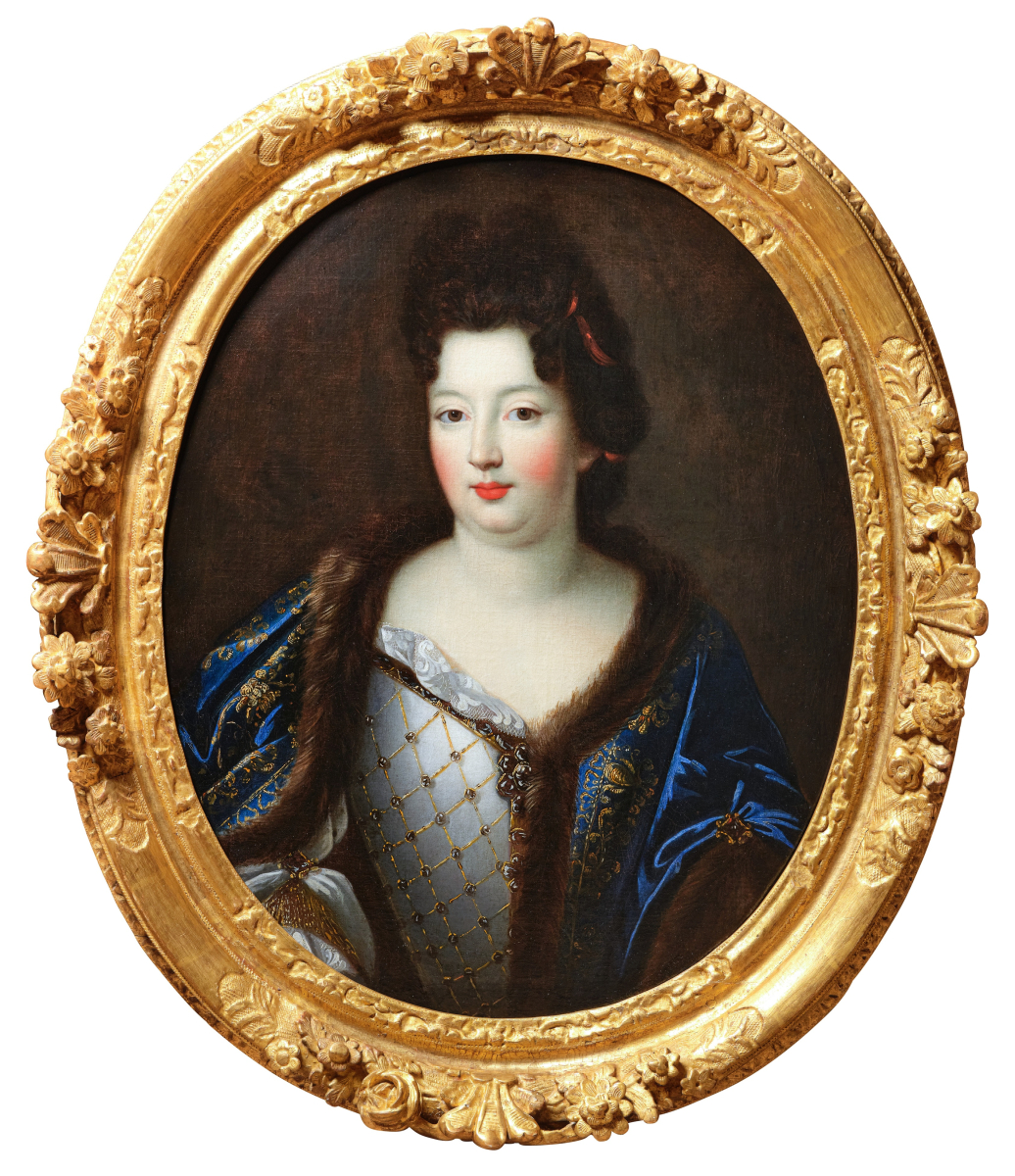
Portrait of Élisabeth-Charlotte d’Orléans, Duchess of Lorraine
French School, circa 1695–1700, late 17th century
Oil on canvas
Dimensions: h. 28.54 in, w. 22.83 in (72,5 x 58 cm)
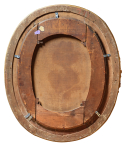
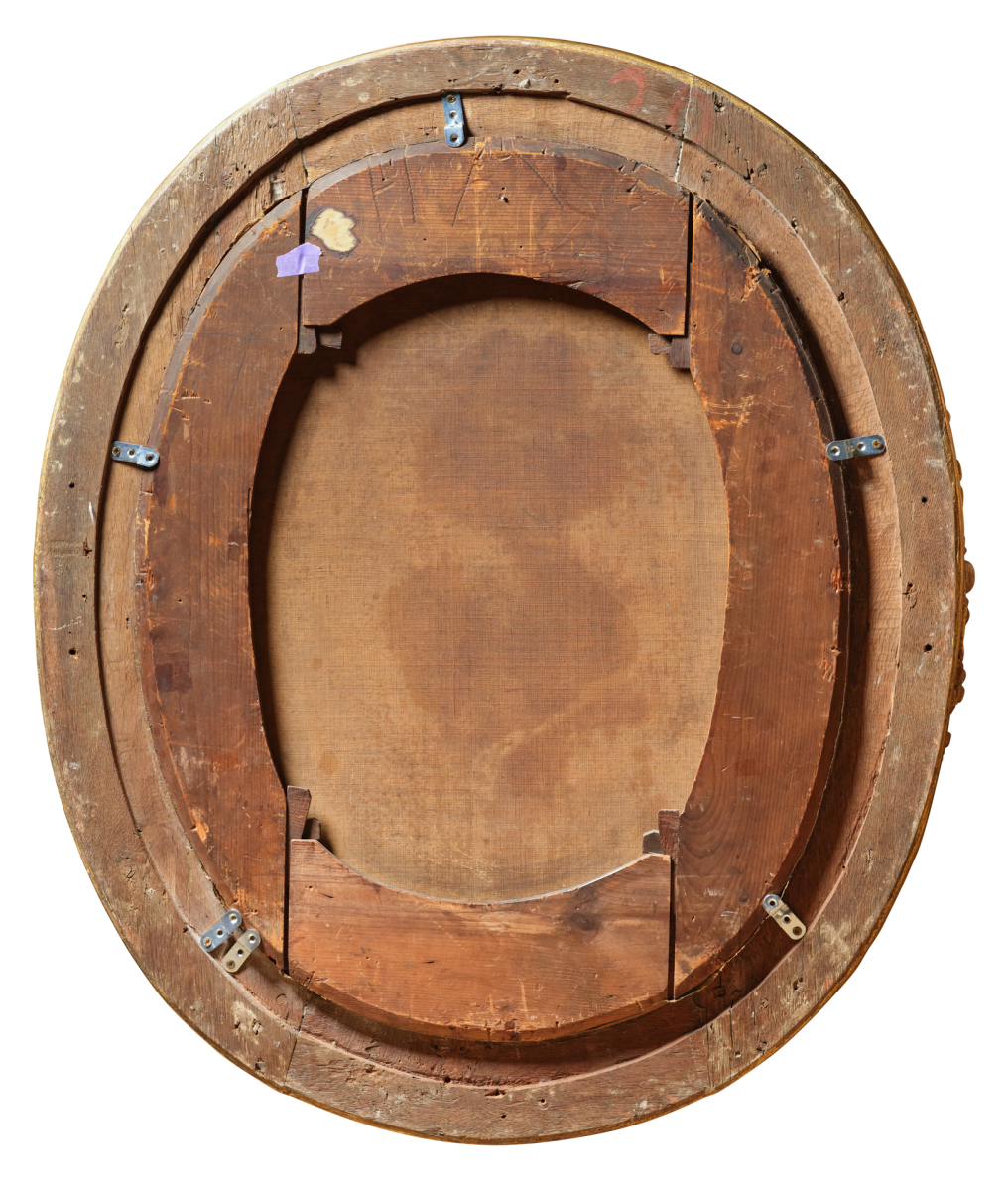
17th century Louis XIV period richly carved giltwood frame
Framed: h. 36.22 in, w. 31.10 in ( 92 x 79 cm)
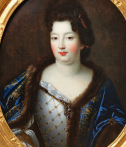
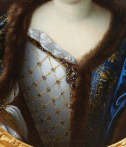
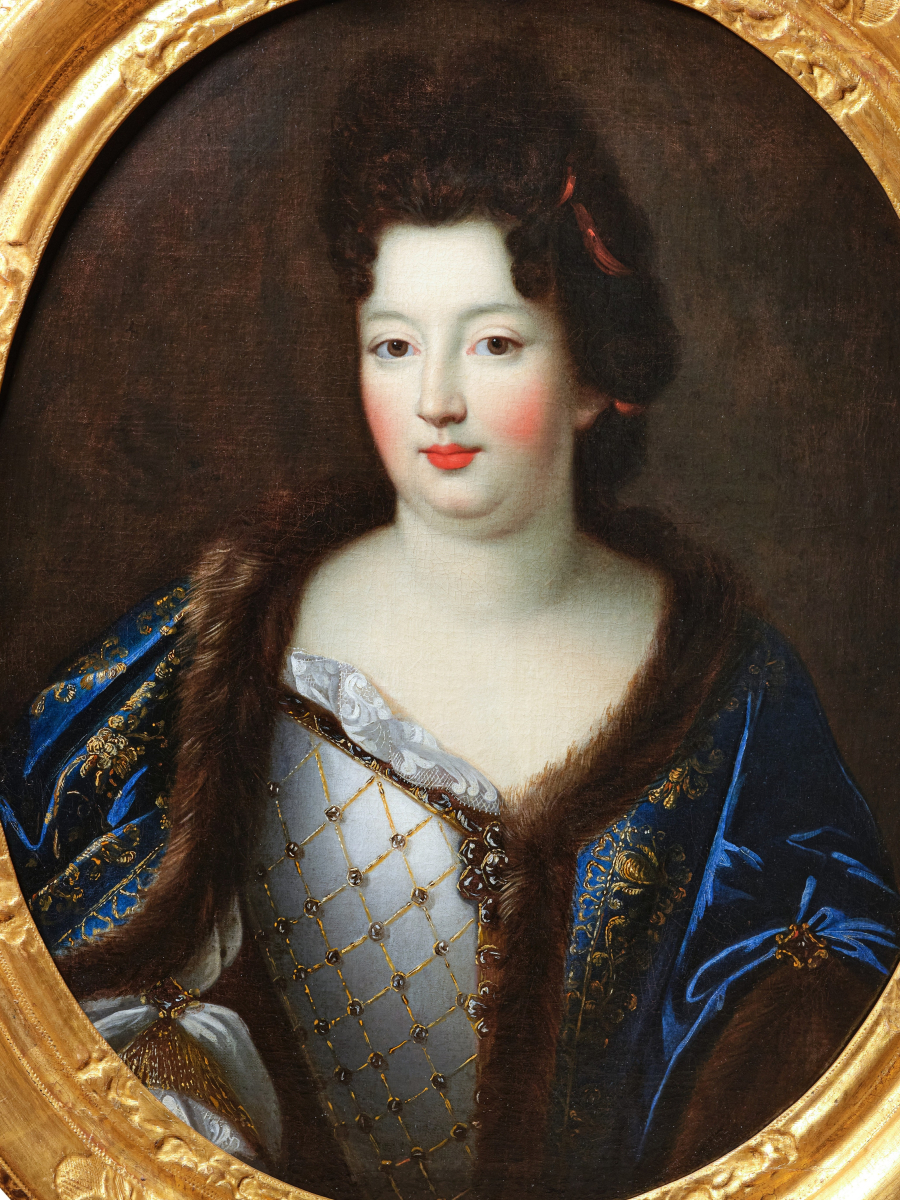
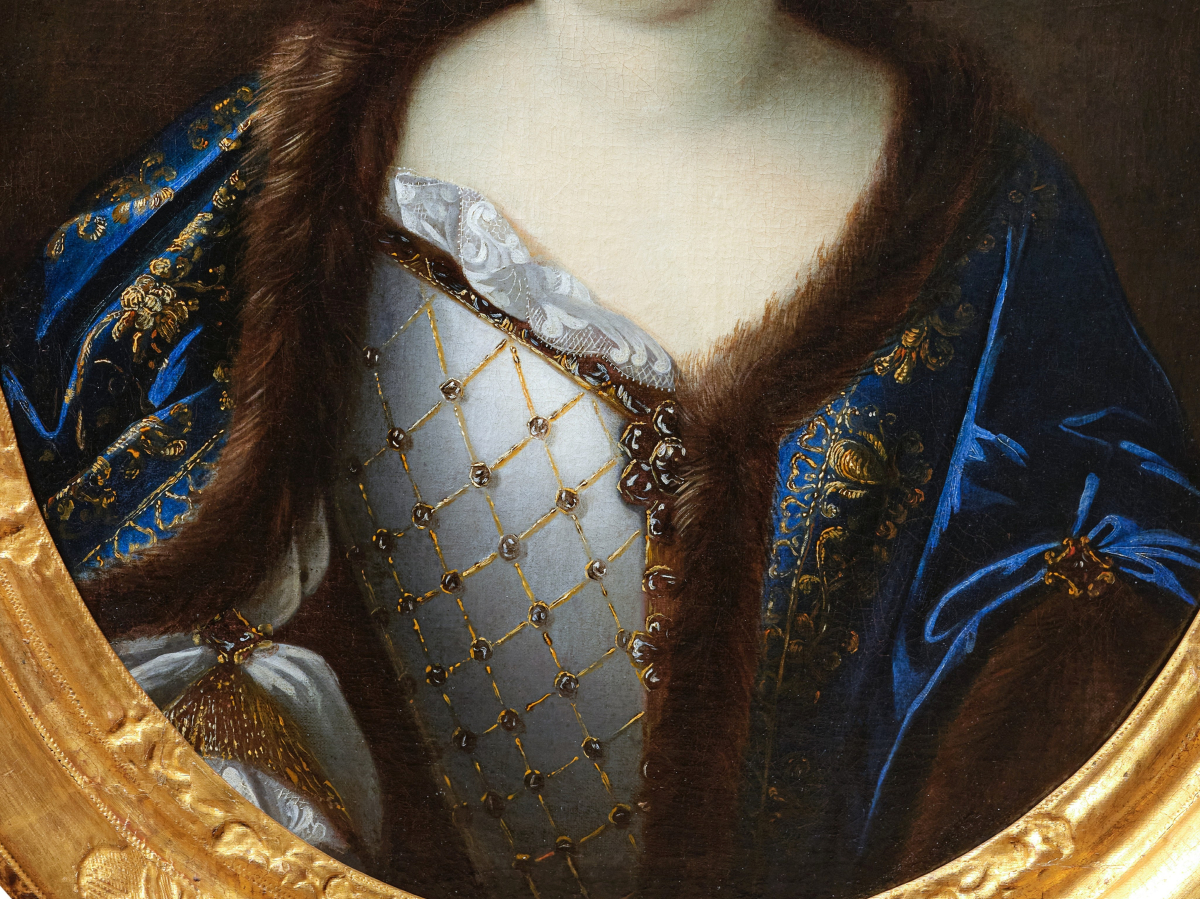
An opulent portrait of Élisabeth-Charlotte d’Orléans, niece of Louis XIV and future Duchess of Lorraine, this painting evokes the splendor and cultivated elegance of the court of Versailles. Luxurious textiles, intricate gold embroidery, pearls, and jeweled ornaments combine with the sitter’s luminous complexion to create an image of aristocratic splendor.
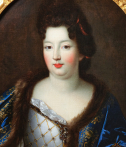
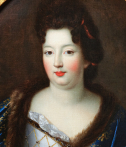
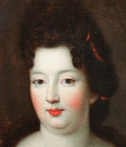
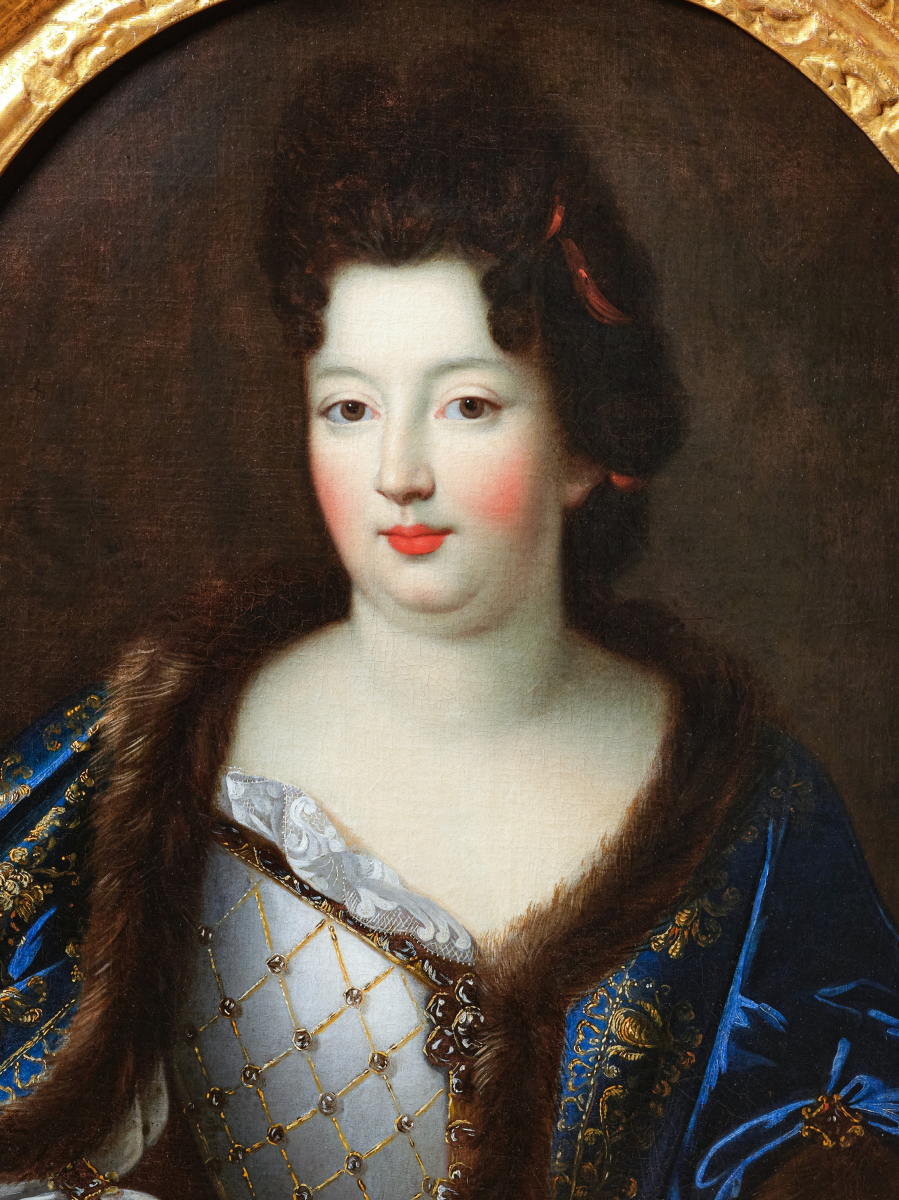
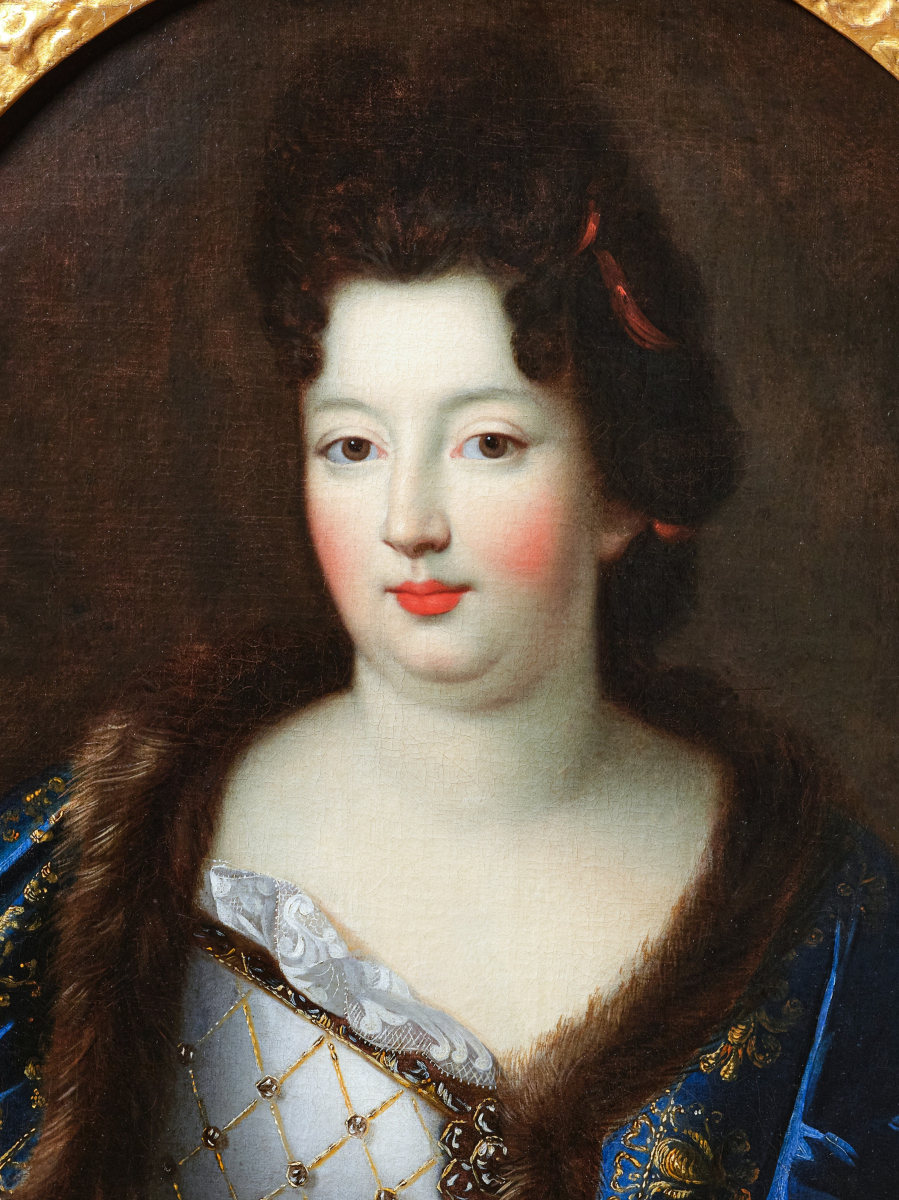
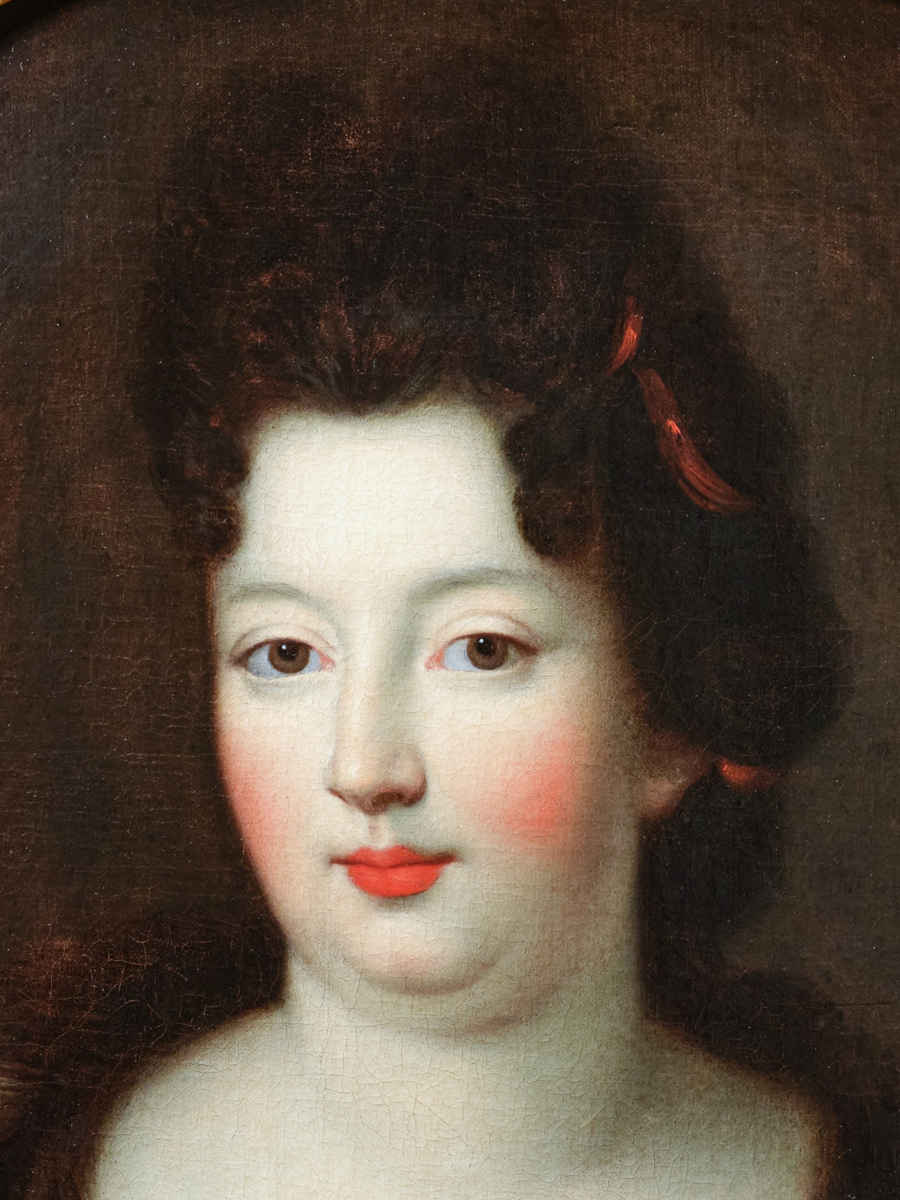
Presented half-length within an oval composition, the princess emerges from a deep, subdued background that heightens the brilliance of her attire. Her face turns almost directly toward the viewer, her composed expression balancing the exuberance of her costume. Her dark hair is arranged in the fashionable Fontanges style, swept upward and accented with red ribbons, with two curls framing her forehead.
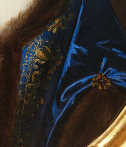
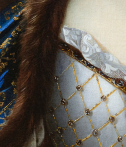
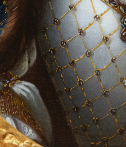
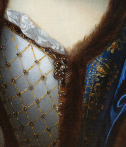
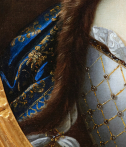
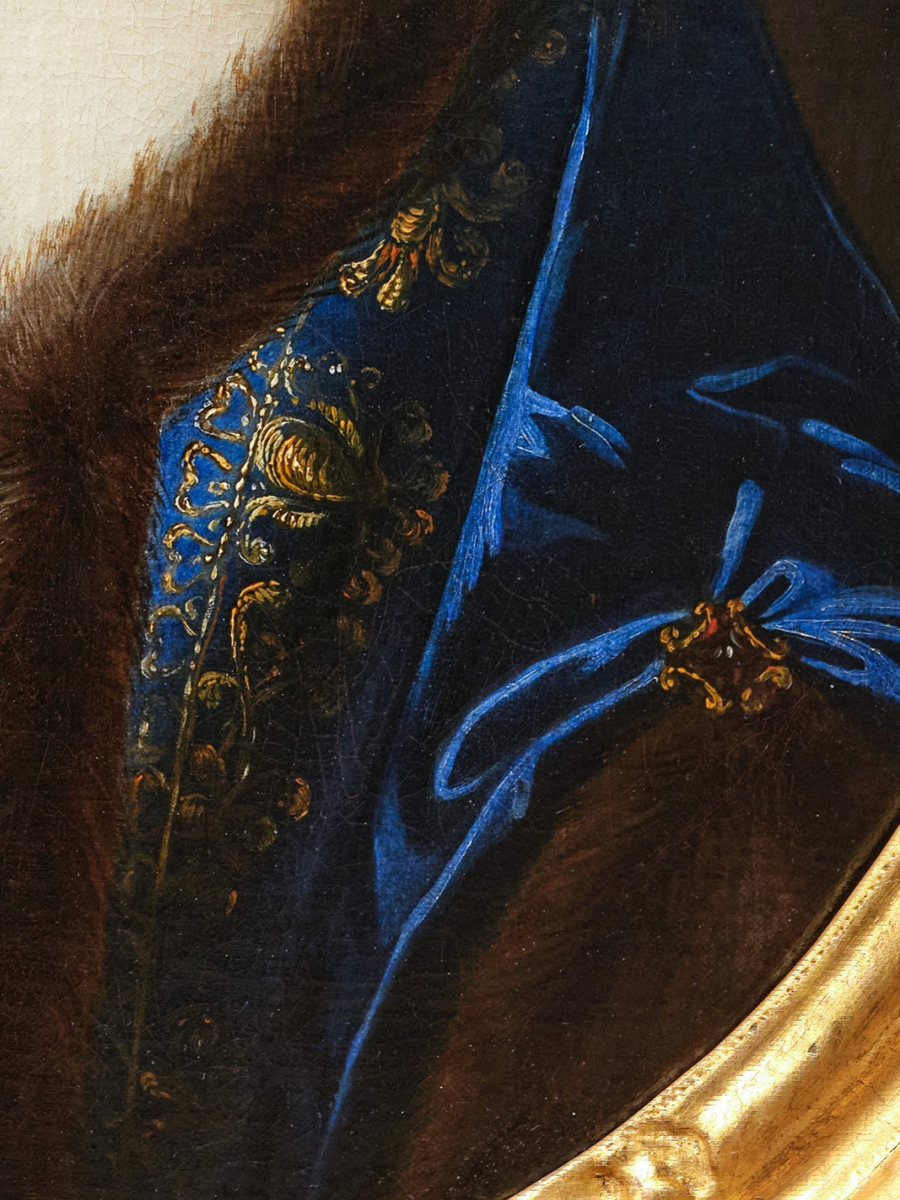
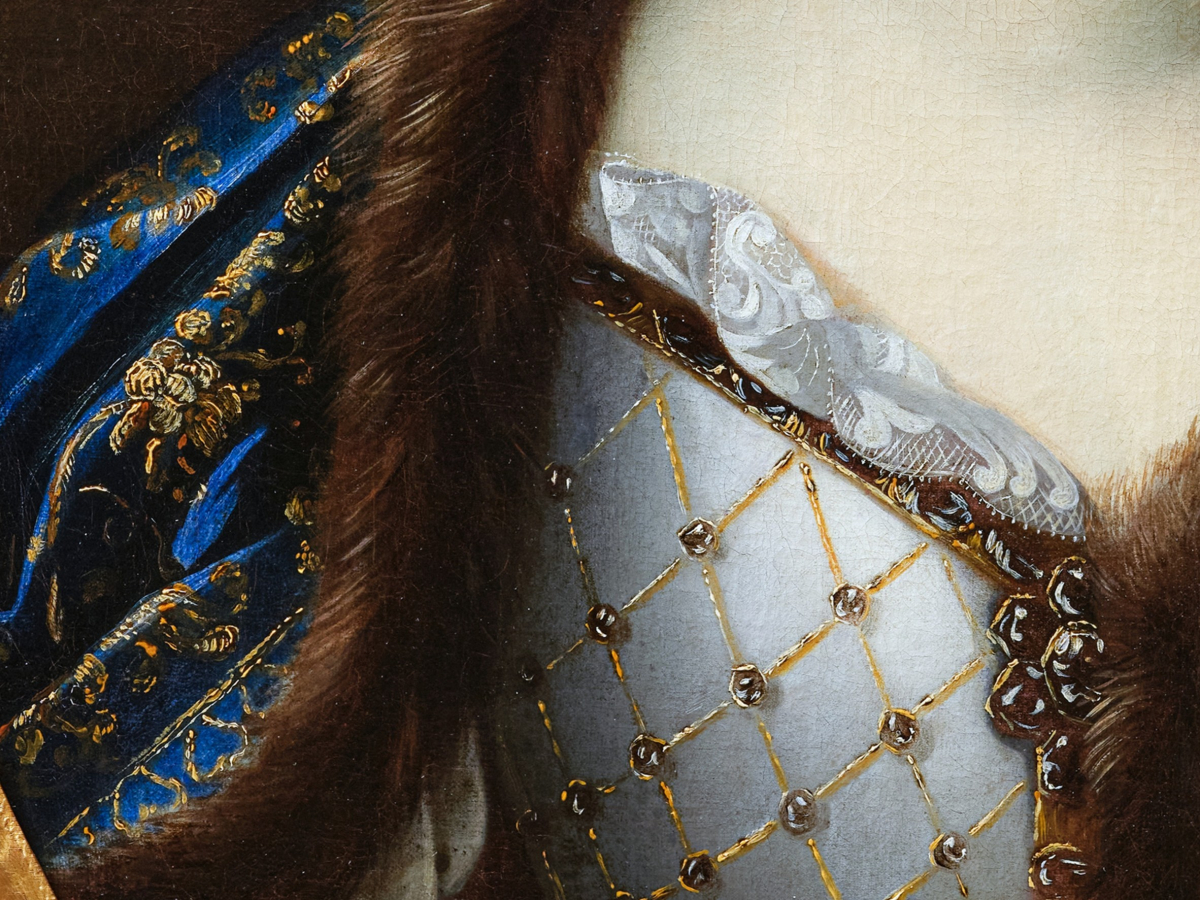
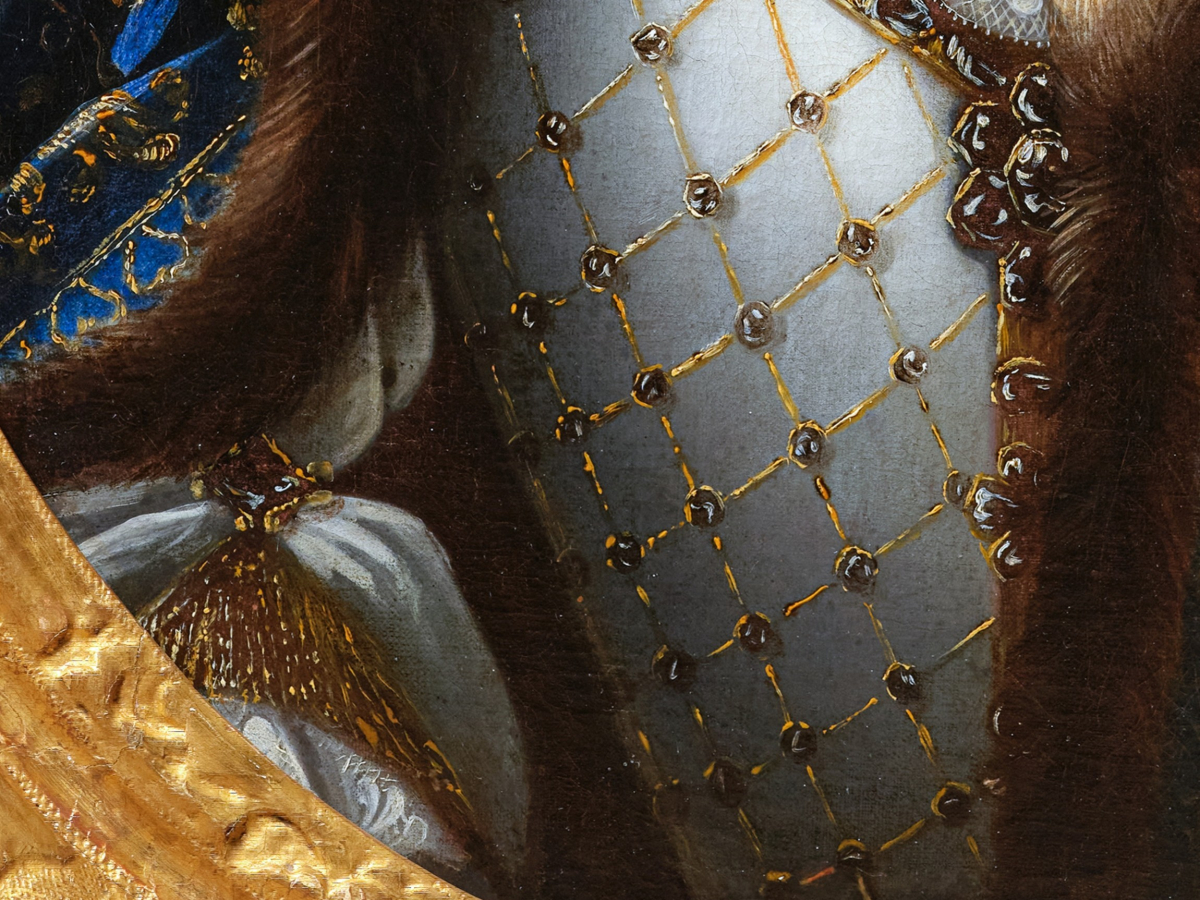
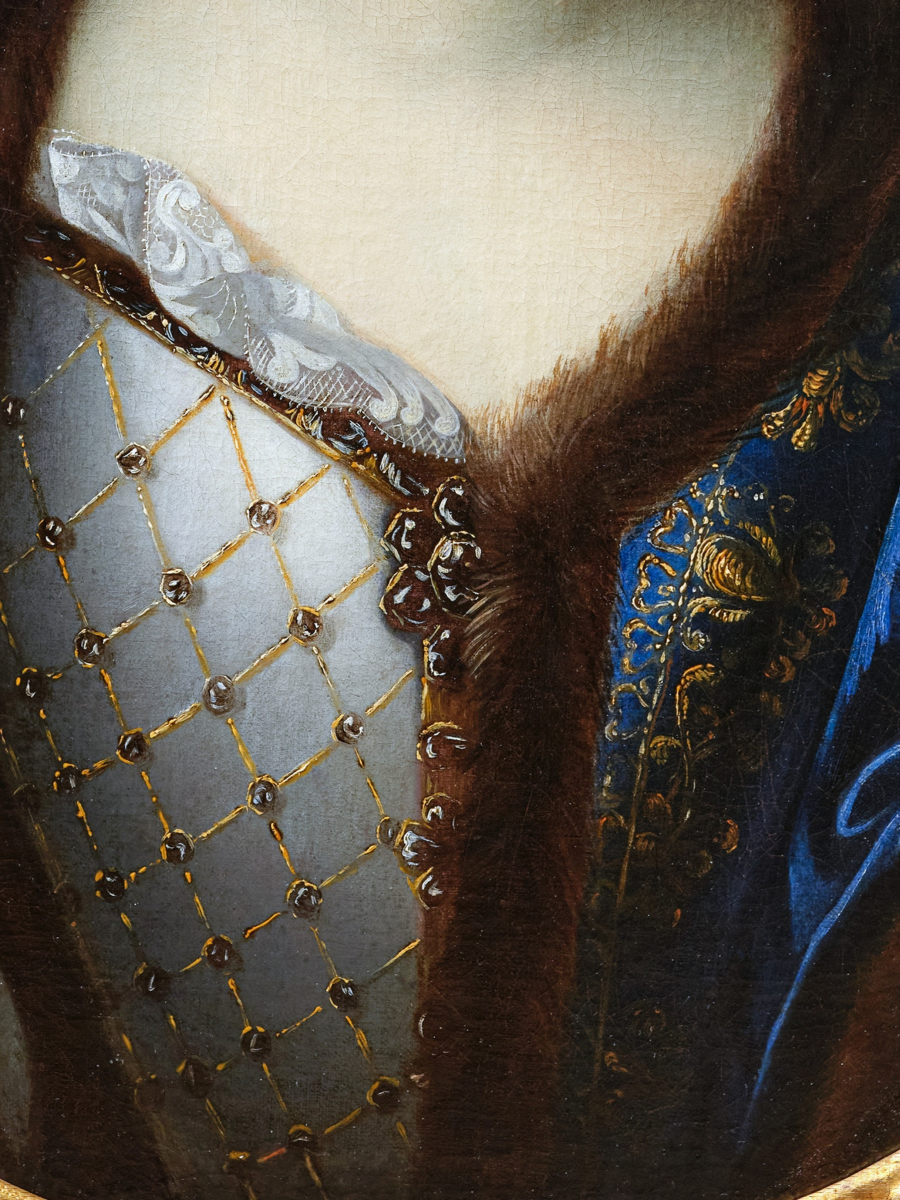
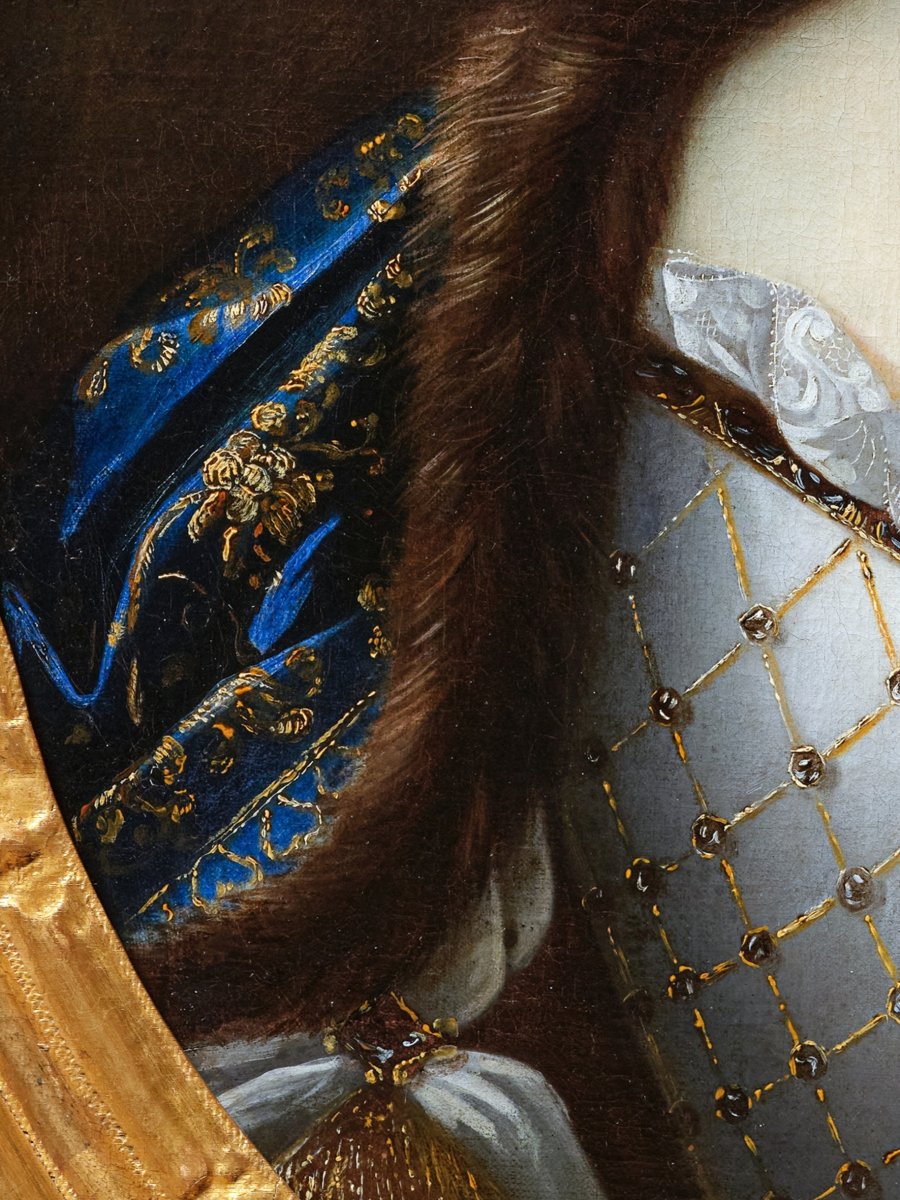
A sumptuous blue velvet mantle, embellished with gold-thread embroidery and edged with marten fur, envelops her shoulders. It opens to reveal a white satin bodice crossed by a delicate lattice of gold cords, with pearls set at their intersections. Fine lace traces the neckline and trims the white satin sleeve, which is finished with gold fringe and gathered by a gemstone clasp. The interplay of lustrous satin, richly colored velvet, soft fur, and glittering ornament gives the portrait its lavish character.
The composition draws upon Pierre Gobert’s Élisabeth-Charlotte d’Orléans as Venus Taking Cupid’s Weapons, painted in 1698 and preserved at the Palais des ducs de Lorraine–Musée lorrain in Nancy (inventory no. 95.363). In our portrait, the princess’s likeness is presented in a more intimate, half-length format, without the mythological narrative, allowing her features and magnificent dress to command the viewer’s attention.
The 17th century carved giltwood frame completes the presentation, its warm gold surface echoing the embroidery and jeweled details of the costume. Together, painting and frame offer a richly decorative expression of French courtly grandeur.
A Princess of Versailles
Born in 1676, Élisabeth-Charlotte d’Orléans was the daughter of Philippe de France, Duke of Orléans and brother of Louis XIV, and Élisabeth-Charlotte of the Palatinate, celebrated as the Princess Palatine. Raised within the royal world of Versailles, she married Léopold I, Duke of Lorraine and Bar, in 1698, carrying her French royal connections into the Lorraine dynasty. Their son, Francis Stephen of Lorraine, later became Holy Roman Emperor Francis I and the husband of Maria Theresa of Austria.
Her portrait belongs to a culture in which dress, jewels, and bearing expressed dynastic identity. The extraordinary richness of the costume is balanced by the restraint of the sitter’s pose, creating the combination of magnificence and composure that defines the image of a royal princess.
Pierre Gobert and His Workshop
Born at Fontainebleau in 1662 into a family of artists, Pierre Gobert established his career through commissions for the French court. An early portrait of the infant Duke of Burgundy marked the beginning of his extensive work portraying royal children and princely families. Admitted to the Académie royale de peinture et de sculpture as a portrait painter in 1701, he became particularly sought after for his elegant representations of princesses and prominent women of the court.
Gobert’s portraits combine luminous flesh tones with sumptuous fabrics, elaborate accessories, and carefully orchestrated poses. Whether depicted in magnificent court dress or in the guise of a mythological figure, his sitters embody the polished luxury of French aristocratic society.
From 1707, Gobert also worked for Duke Léopold at the court of Lorraine, producing portraits of the ducal family with the assistance of his workshop. The demand for these images and their replicas sustained a substantial studio practice, extending the visual language of the French royal court beyond Versailles. He subsequently continued his royal and princely commissions in Paris, where he died in 1744. Examples of his work are preserved at the Château de Versailles.